There’s a moment most of us have had: you type your weight and height into a BMI calculator, get a number, and then stare at it wondering what it actually means for you. Living in Nashville for years and coaching people on their health goals taught me one thing fast: a raw BMI number without context is almost useless. The best BMI calculator with age and gender built in gives you something far more meaningful. It stops treating a 60-year-old woman and a 22-year-old male athlete as the same body, and that shift alone changes how you approach your health.
What Is BMI and Why Age and Gender Matter
Most people know BMI stands for Body Mass Index. But fewer people understand why two people with the exact same BMI can have wildly different health outcomes. Let me break this down the way I’d explain it to someone sitting across from me.
Basic BMI Formula Explained Simply
The formula is straightforward:
BMI = Weight (kg) ÷ Height² (m²)
If you prefer pounds and inches, the formula shifts slightly but the concept is identical. You’re essentially comparing how much you weigh relative to how tall you are.
Why do doctors and clinics still use it? Because it’s fast, free, and works well enough at the population level. You don’t need a lab or a fancy machine. For general screening, BMI does a decent job of flagging who might need a closer look.
But here’s the honest truth: BMI does not measure body fat directly. It has no idea if that weight is muscle, fat, bone, or water. That’s where the trouble starts, and where age and gender become critical inputs.
How Age Changes BMI Interpretation
After the age of 30, most people begin losing muscle mass. This process, called sarcopenia, speeds up after 50. What that means in practice: an older adult can have a “normal” BMI on paper while carrying a much higher percentage of body fat than that number suggests.
I’ve seen this in real life. A 65-year-old client of mine in Nashville had a BMI of 24.5, which sounds perfectly healthy. But when we did a body composition scan, her body fat percentage was well into the obese range. Her muscle mass had dropped so significantly over the years that her weight looked fine, but her fat-to-muscle ratio told a completely different story.
Adjusted healthy BMI ranges for seniors reflect this. Some clinical guidelines now suggest that a BMI between 23 and 30 may actually be acceptable for adults over 65, compared to the standard 18.5 to 24.9 range for younger adults.
Gender Differences in BMI
Women naturally carry more body fat than men, even at the same BMI. This is not a flaw in female physiology. It’s biology. Estrogen promotes fat storage, especially around the hips and thighs, which serves reproductive and hormonal functions.
A woman with a BMI of 24 may have around 28 to 32 percent body fat. A man with the exact same BMI might carry only 18 to 22 percent. Both might fall into the “normal” category, but their actual body composition is very different.
This is why gender-specific BMI interpretation matters. A calculator that treats men and women identically is leaving critical information on the table.
Best BMI Calculator With Age and Gender Features
Not every calculator is worth your time. I’ve tested a lot of them, from simple one-input tools to full health dashboards, and the quality varies enormously.
Key Features to Look For
When you’re searching for the best BMI calculator with age and gender adjustments, these are the features that actually matter:
Age-adjusted interpretation: The calculator should not just spit out a number. It should tell you what that number means for your specific age group. A BMI of 27 means something different at 30 than it does at 70.
Gender-specific fat estimation: Look for tools that factor in the biological differences in fat distribution between men and women. This alone makes the output significantly more useful.
Visual charts and health categories: A good tool shows you where you fall on a spectrum, not just gives you one number. Visual context helps you understand your trends over time.
Mobile-friendly or app integration: If you can’t check it easily on your phone, you’re less likely to use it consistently. Consistency is everything when it comes to health tracking.
Risk analysis: The best tools go beyond BMI to mention related health risks, like cardiovascular disease or type 2 diabetes risk, so you can take action.
Advanced vs Basic Calculators
Basic calculators give you your BMI number and a category: underweight, normal, overweight, or obese. That’s fine for a quick check, but it stops there.
Advanced calculators pull in more data. They may include:
- Basal Metabolic Rate (BMR), which tells you how many calories your body needs at rest
- Estimated body fat percentage based on age, gender, weight, and height
- Waist-to-height ratio for cardiovascular risk
- Trend tracking so you can see progress over weeks or months
For most people doing general health monitoring, a well-built basic calculator with age and gender inputs is enough. If you’re working toward a specific fitness goal or managing a chronic condition, an advanced tool gives you more to work with.
Top BMI Calculators You Can Use Today
Let me walk you through the actual tools I’ve found most reliable. These are the ones I recommend when people ask me where to start.
Medical-Grade Tools
CDC BMI Calculator: The Centers for Disease Control and Prevention offers a free, straightforward BMI calculator on their website. It’s not flashy, but it’s accurate and updated with the latest clinical guidelines. For adults, it gives you your BMI and a category. For children and teens, it also provides age and sex-specific percentiles, which is critical since adult BMI charts don’t apply to growing bodies.
WHO BMI Resources: The World Health Organization provides international BMI standards along with context about how BMI thresholds may vary across different populations. If you’re working with a healthcare provider, they’re likely using WHO or CDC guidelines as their reference point.
These tools have the highest trust level because they’re backed by decades of public health research. They’re not trying to sell you anything. That matters.
Smart Fitness Apps
Several popular fitness apps now include BMI tracking alongside body composition features:
MyFitnessPal integrates BMI tracking with calorie logging and nutrition data. You can connect it with wearables like Fitbit or Apple Health to get a broader picture of your activity and health trends.
Cronometer goes deeper into nutritional data and includes body measurement tracking. If you care about the details, it’s worth exploring.
Apple Health and Google Fit both allow you to log your BMI over time and view trends. They’re not calculators in themselves, but when paired with a smart scale, they become powerful tracking tools.
One small annoyance I’ve noticed with fitness apps: some push ads or try to upsell premium features constantly. It can get in the way. If that bothers you, stick to the CDC or WHO tools for straightforward calculations.
AI-Powered BMI Tools
This is a newer category, and I want to be both fair and honest here.
Some AI-powered health tools now offer personalized BMI insights that factor in your age, gender, lifestyle habits, sleep, and activity levels. They can give predictive suggestions, like flagging that your current trajectory might increase your cardiovascular risk over the next decade, or recommending specific changes based on your profile.
The upside: these tools offer genuinely personalized health insights that generic calculators can’t match.
The honest caveat: not all AI health tools are regulated or validated against clinical data. Some are well-built and evidence-based. Others are sophisticated-looking products with thin science underneath. Before trusting an AI health tool with meaningful medical decisions, check whether it cites peer-reviewed sources and whether it encourages you to verify findings with your doctor.
BMI Categories by Age and Gender
Here’s a clean reference table that reflects both standard and adjusted interpretations. This pulls together what I’ve seen used in both clinical settings and fitness coaching.
Standard BMI Categories
| BMI Range | Category | General Meaning |
|---|---|---|
| Below 18.5 | Underweight | May indicate nutritional gaps or low muscle mass |
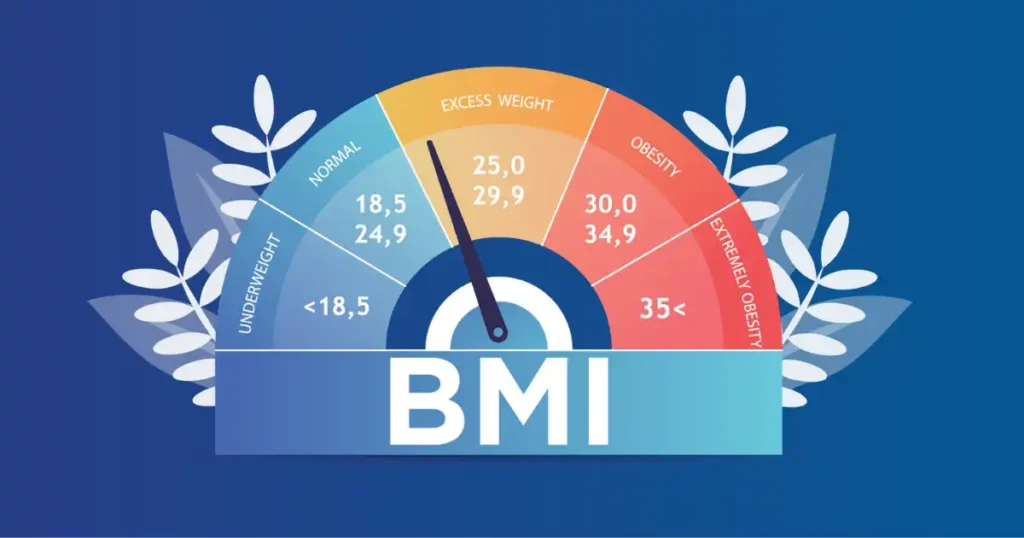
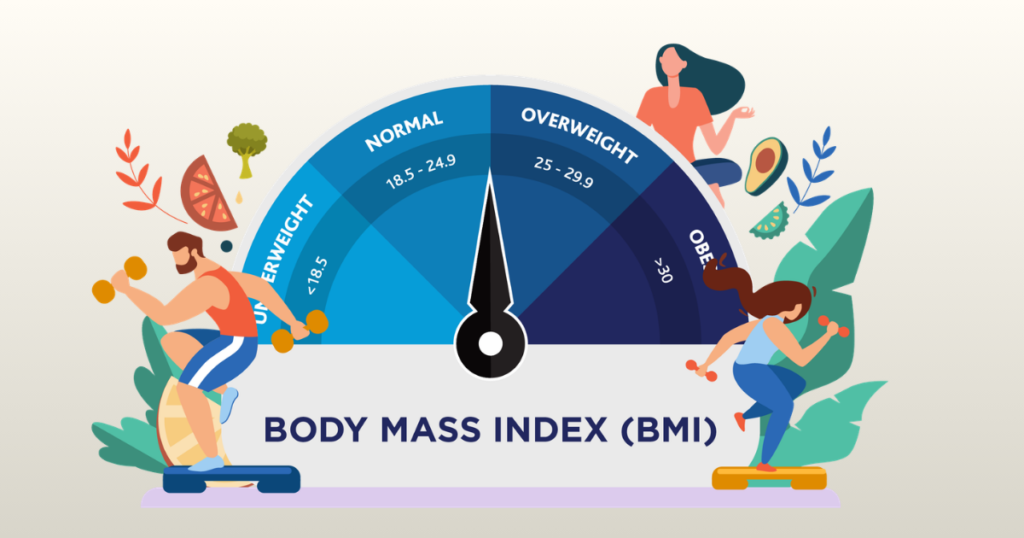
| 18.5 to 24.9 | Normal weight | Generally healthy range for most adults |
| 25 to 29.9 | Overweight | Increased risk for metabolic and cardiovascular issues |
| 30 and above | Obese | Higher risk for chronic diseases including type 2 diabetes and heart disease |
Adjusted Insights by Age and Gender
| Group | Adjusted Consideration |
|---|---|
| Adults over 65 | BMI up to 27 or 28 may be clinically acceptable; muscle preservation matters more |
| Women (all ages) | Healthy body fat range is 20 to 32%, compared to 10 to 22% in men at similar BMI |
| Athletes and bodybuilders | BMI may read as overweight or obese due to high muscle mass; body fat % is a better metric |
| Asian adults | Health risks for conditions like type 2 diabetes may begin at lower BMI thresholds (around 23) |
One thing I always tell people: these tables are starting points, not sentences. Your doctor’s interpretation of your specific situation should always take priority over any chart.
BMI vs Body Fat Percentage
This is where a lot of confusion lives, and I want to clear it up properly.
BMI and body fat percentage measure very different things. BMI uses only your weight and height. Body fat percentage actually estimates how much of your total weight is fat. They often point in the same direction, but not always.
Back when I was in Nashville testing both methods at a local gym, I had a scan done after a particularly active morning. BMI said “overweight.” Body fat percentage said “fit.” That gap was entirely explained by muscle mass. BMI had no way to account for the fact that I’d spent years building lean muscle.
That disconnect is real for a lot of people, and understanding it helps you avoid unnecessary anxiety about a number.
Key Differences Comparison
| Metric | What It Measures | Accuracy Level | Best Used For |
|---|---|---|---|
| BMI | Weight relative to height | Moderate (population screening) | Quick general health screening |
| Body Fat Percentage | Actual fat composition | High (especially with DEXA or smart scales) | Fitness goals and detailed health analysis |
| Waist-to-Hip Ratio | Fat distribution pattern | High (for cardiovascular risk) | Heart disease and metabolic risk assessment |
| Waist-to-Height Ratio | Central obesity | High | Abdominal fat risk in all ages |
Each metric has a role. BMI is the fast, accessible screen. Body fat percentage is the closer look. Waist measurements tell you where the fat is sitting, which matters enormously for heart health.
How to Use a BMI Calculator Correctly
Getting an accurate BMI reading is not complicated, but a few small habits make a real difference in the quality of your results.
Step-by-Step Guide
Step 1: Weigh yourself correctly. Weigh yourself in the morning, before eating or drinking, after using the restroom. Body weight fluctuates by 2 to 5 pounds throughout the day due to food, water, and activity. Morning weight is the most consistent baseline.
Step 2: Measure your height accurately. Don’t guess. Stand against a wall, measure to the top of your head without shoes. Height is often slightly shorter in older adults due to spinal compression, so re-measure if you haven’t in a few years.
Step 3: Enter your correct age. A quality BMI calculator with age adjustment will use this to contextualize your result. Some tools use age brackets (like 20 to 39, 40 to 59, 60 and above), while others calculate continuously.
Step 4: Select your biological sex. This ensures the fat estimation models used by the calculator reflect your physiology accurately.
Step 5: Review the interpreted result, not just the number. Look at what the calculator says about your specific category in the context of your inputs. A number without interpretation is just a number.
Common Mistakes to Avoid
Using your weight from yesterday after a big meal: This inflates your reading and gives you a false picture. Stick to consistent, morning measurements.
Comparing results across different calculators without understanding their methods: Some calculators use different formulas or reference populations. If you switch tools mid-tracking, your trend data loses meaning.
Ignoring muscle mass context: If you strength train regularly, your BMI will naturally read higher than average. This is expected and does not indicate poor health.
Obsessing over a single reading: BMI is a trend tool. One reading means almost nothing. A series of readings over months tells you something real.
Expert Advice on BMI Accuracy
Grounded expert perspective matters here, so let me share a couple of insights that have genuinely shaped how I think about this topic.
USA Health Expert Insight
“BMI is a useful screening tool, but it should never be the only metric guiding health decisions,” says Dr. Michael Jensen, an endocrinologist at Mayo Clinic. His work has long emphasized combining BMI with waist circumference and metabolic markers for a complete picture.
What this means practically: use your BMI as one data point in a larger set. Combine it with blood pressure, fasting glucose, cholesterol levels, and waist circumference. Together, these give your doctor a much more complete view of your cardiovascular and metabolic health.
Health trends matter more than single readings. If your BMI has been stable for two years and your other markers are healthy, that’s meaningful. If your BMI is creeping up over 18 months alongside rising blood pressure, that pattern is worth addressing even if your current number still falls in the “normal” range.
Real-Life Context Example
Consider two people, both with a BMI of 27.
Person A is a 25-year-old recreational athlete. She lifts weights four days a week and runs on weekends. Her body fat percentage is 22%, well within the healthy range for women. Her BMI reads “overweight” purely because muscle is denser than fat.
Person B is a 45-year-old office worker who drives to work, sits most of the day, and gets about 4,000 steps a day. His body fat percentage is 31%. His waist circumference is high. His BMI also reads “overweight,” but the story it’s telling is very different.
Same BMI. Completely different health profiles. This is exactly why context, including age, gender, lifestyle, and body composition, changes everything.
When BMI Is Misleading
Let me be straight with you: BMI fails in specific and predictable situations. Knowing those situations helps you use it wisely.
Cases Where BMI Gets It Wrong
Bodybuilders and strength athletes: Muscle is roughly 18% denser than fat. Someone who is heavily muscled will almost always have a higher BMI than their body fat percentage would suggest. Many elite athletes technically fall into the “overweight” or even “obese” BMI category. This is a known limitation of the metric.
Older adults with low muscle mass: This is the flip side. An elderly person who has lost significant muscle mass (which is very common and called sarcopenia) can have a perfectly normal BMI while carrying dangerously high body fat. Their low weight isn’t a sign of leanness; it’s a sign of muscle loss.
Certain ethnic populations: Research has consistently shown that people of South Asian, East Asian, and some other ethnic backgrounds face higher health risks at lower BMI thresholds. The American Diabetes Association and other bodies now recommend lower BMI screening cutoffs for Asian Americans, around 23 instead of 25, for conditions like type 2 diabetes.
Pregnant women: BMI guidelines are entirely different during pregnancy and should never be interpreted using standard adult categories.
Very tall or very short individuals: The BMI formula doesn’t scale perfectly across extreme height ranges. Very tall people may have their BMI underestimated, while very short people may see it overestimated.
Better Alternatives When BMI Falls Short
When you suspect BMI isn’t giving you an accurate picture, these are the tools worth considering:
DEXA scan (Dual-Energy X-ray Absorptiometry): This is the gold standard for body composition measurement. It measures lean mass, fat mass, and bone density with high precision. It’s used in clinical research and is increasingly available at sports medicine clinics and some gyms.
Hydrostatic (underwater) weighing: Another highly accurate method based on the principle that fat floats and muscle sinks. Less commonly available but very reliable.
Skinfold measurements: A trained clinician uses calipers to measure fat at specific body sites. Accuracy depends heavily on the skill of the person doing the measurement, but when done well, it’s a practical and affordable alternative.
Smart scales with bioelectrical impedance: These send a small electrical current through your body to estimate fat and muscle percentages. Accuracy varies by brand and by hydration level, but consumer-grade smart scales have improved significantly in recent years. Brands like Withings and Tanita are generally well-regarded.
Waist circumference and waist-to-height ratio: Simple tape measure metrics that are surprisingly powerful. A waist circumference above 40 inches in men and 35 inches in women is a recognized risk threshold for metabolic syndrome. Waist-to-height ratio below 0.5 is considered a healthy target for most adults.
Choosing the Best BMI Calculator for Your Needs
The right tool depends on what you’re actually trying to accomplish. There is no single “best” calculator for everyone.
For Weight Loss Goals
If you’re tracking progress toward a lower weight, you want a calculator that shows trends over time, not just a snapshot. Look for:
- Progress tracking across weeks or months
- Integration with calorie counting or food logging
- Alerts or milestones to keep you motivated
- Visual charts that make it easy to see your direction
Apps like MyFitnessPal or Lose It! combine BMI tracking with the food diary functionality you need to connect your habits to your results.
For Fitness Enthusiasts
If you’re already active and building muscle, body fat percentage is a more meaningful metric than BMI alone. You want:
- Body fat percentage tracking alongside BMI
- Muscle mass estimation (usually from smart scales or apps paired with them)
- Integration with wearables like Apple Watch or Fitbit
- Performance metrics alongside body composition data
The standard BMI number will likely misrepresent your health. Focus more on body fat trends and functional fitness markers.
For General Health Monitoring
If you just want a reliable, no-fuss way to keep an eye on your health, you don’t need anything complicated. You want:
- A trusted, evidence-based tool (CDC or WHO calculators are ideal)
- Age and gender inputs for contextualized output
- Clear category explanation so you know what your number means
- Easy enough to use quarterly or monthly without friction
Keep it simple. A five-minute check-in a few times a year with a trusted tool is far more valuable than obsessing over daily fluctuations on an overcomplicated platform.
Semantic Context: Related Health Metrics Worth Knowing
Since we’re talking about accurate health tracking, a few related terms come up naturally in any serious discussion of BMI.
Basal Metabolic Rate (BMR): The number of calories your body burns at complete rest. Closely related to body weight and composition. As you lose fat and gain muscle, your BMR increases, which makes weight management easier over time.
Metabolic syndrome: A cluster of conditions, including high blood pressure, high blood sugar, excess waist fat, and abnormal cholesterol, that together raise your risk of heart disease and diabetes. BMI alone won’t tell you if you have metabolic syndrome.
Body composition: The ratio of fat mass to lean mass (muscle, bone, water, organs). This is the gold-standard way to understand what your body is actually made of.
Visceral fat: Fat stored around internal organs, deep in the abdominal cavity. This type of fat is far more dangerous than subcutaneous fat (fat under the skin) and is closely associated with cardiovascular disease, insulin resistance, and inflammation. Waist circumference is a proxy measure for visceral fat accumulation.
Healthy weight range: Rather than a single number, most clinicians now talk about a healthy weight range based on your height, age, gender, and body composition. BMI defines this range broadly, but your doctor can refine it for your specific situation.
Final Thoughts on Using BMI With Age and Gender
Here is what I want you to walk away with.
BMI is a tool. Like any tool, it works well when used correctly and for the right job. The best BMI calculator with age and gender adjustments gives you a smarter, more personalized output than a basic weight-height formula ever could. It accounts for the fact that a 55-year-old woman’s body is not the same as a 25-year-old man’s body, even if the number is identical.
Use it as a starting point. Pair it with other metrics like waist circumference, body fat percentage, and regular blood work. Track trends over months, not days. And always bring the results to a conversation with your doctor rather than interpreting them in isolation.
The goal was never to get a perfect BMI number. The goal is a healthier, more energetic life. BMI is one signpost on that road. It is not the destination.
Final Recommendation
After years of helping people navigate their health numbers, here is my honest recommendation.
Start with the CDC’s free BMI calculator. It’s accurate, trusted, and gives you an age-appropriate interpretation. If you’re under 40 and active, pair it with a smart scale that estimates body fat percentage so you’re not misled by muscle mass. If you’re over 50, ask your doctor about getting a DEXA scan or at minimum a waist circumference measurement alongside your BMI reading.
For ongoing tracking, an app like MyFitnessPal or Apple Health works well for most people. They’re convenient, they show your progress over time, and they connect to the rest of your health data.
Avoid putting too much weight (no pun intended) on any single reading. Health is a long game. Consistent, accurate tracking over months and years tells a story that one number never can.
The best thing you can do is start. Measure today. Measure again in three months. Notice the trend. Act on it. That’s where real health progress comes from.
Frequently Asked Questions
1. Why is the best bmi calculator with age and gender better?
Age and sex change how your body stores fat. Using the best bmi calculator with age and gender gives you a more precise health score for your unique life stage.
2. Does the best bmi calculator with age and gender track kids?
Yes, it does. Kids grow in unique ways. The best bmi calculator with age and gender uses percentiles to show if a child is on a healthy path for their growth.
3. Is sex key for the best bmi calculator with age and gender?
Men and women have different muscle levels. The best bmi calculator with age and gender accounts for this. It helps you see your true fitness with great ease.
4. Can seniors use the best bmi calculator with age and gender?
Older adults may need more body fat. The best bmi calculator with age and gender shifts its range. This helps you maintain a safe and healthy weight as you age.
5. Is the best bmi calculator with age and gender free?
Many top tools are free to use online. You can find the best bmi calculator with age and gender on many health sites. It is a quick and simple way to get data.
6. Does the best bmi calculator with age and gender use charts?
Most show you where you fall on a list. The best bmi calculator with age and gender helps you see your group. This visual makes your health goals very clear.
7. How to find the best bmi calculator with age and gender?
Look for a site that asks for your birth date. This detail is a sign of the best bmi calculator with age and gender. Start your check today for better health stats.

Shakitul Alam is the CEO, Owner, and Co-founder of BMI Calculator Women AI. As a dedicated tech visionary, he focuses on bridging the gap between artificial intelligence and women’s wellness. Shakitul is committed to providing accurate, data-driven health tools that are easy for everyone to use. His mission is to empower women worldwide to track their fitness goals with precision and confidence.