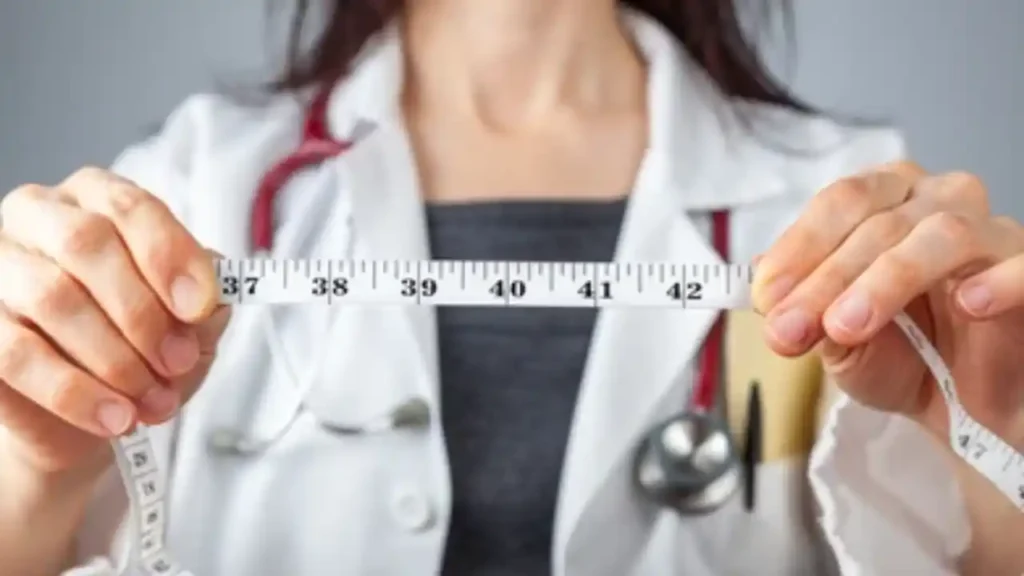
Tracking your health used to feel simple. You stepped on the scale, checked your BMI, and called it a day. But after years of working with people on their fitness goals, I can tell you that the BMI calculator with body fat percentage option changed how I and many others actually understand body composition. It gives a fuller, more honest picture. I first discovered this combo tool during a wellness challenge in Denver, Colorado, and it genuinely shifted my thinking. This guide walks you through everything you need to know, from how it works to how to use it in real life, without any fluff.
What Is a BMI Calculator With Body Fat Percentage Option?
Most people have used a basic BMI calculator at some point. You plug in your height and weight, and it spits out a number. Simple. But that simplicity hides a big problem. A BMI calculator with body fat percentage option goes further. It combines two key health metrics into one tool, giving you a sharper view of what is actually happening inside your body.
Understanding Body Mass Index (BMI)
BMI stands for Body Mass Index. The formula is straightforward: weight in kilograms divided by height in meters squared. That is it. No muscle, no fat, no age, no gender. Just weight over height.
BMI became popular because it is easy to calculate at scale. Doctors, insurance companies, and public health researchers love it. You can run it on thousands of people with zero equipment. That is a real advantage.
But here is the flaw. BMI treats all weight the same. Whether that weight is dense muscle or soft fat, it counts the same. A 200-pound bodybuilder and a 200-pound sedentary person with high body fat can get the same BMI score. That is a serious problem when you are trying to assess actual health risk.
What Is Body Fat Percentage?
Body fat percentage measures the proportion of your total body weight that comes from fat. It separates fat mass from lean mass. Lean mass includes muscle, bone, water, and organs.
There are two types of fat you should know about:
- Essential fat: This is the fat your body needs to survive. It supports hormones, organ protection, and nerve function.
- Storage fat: This is the extra fat your body holds in reserve. Too much of it, especially visceral fat around the organs, raises your health risk significantly.
Athletes often have a high BMI but very low body fat. A linebacker or a powerlifter might be labeled “overweight” or even “obese” by BMI standards. But their body fat percentage tells a completely different story. That is why adding this metric matters so much.
How Combined Calculators Work
A combined BMI and body fat calculator asks for more than just height and weight. It typically requests your age, gender, waist circumference, hip measurement, and sometimes neck circumference. These extra inputs feed into established formulas.
The most commonly used method is the U.S. Navy Body Fat Formula, which uses waist, neck, and height for men, and adds hip measurement for women. Other calculators use skinfold estimates or Deurenberg equations. The output gives you both your BMI and an estimated body fat percentage, along with health category labels for each.
Why BMI Alone Is Not Enough
Let me be direct here. BMI is a screening tool. It was never designed to diagnose individual health. Using it alone in 2025 is like navigating with a paper map when GPS exists. It can point you in a direction, but it will miss important turns.
Common BMI Misclassifications
Here are the real situations where BMI fails people every single day.
The Muscular Individual Problem
Muscle is denser and heavier than fat. If you lift weights regularly or play a sport seriously, your BMI can land in the overweight category even when your body fat is excellent. I have seen this happen to college athletes who were told by a campus health screen that they were overweight. Their body fat percentage? Under 15 percent.
The Skinny-Fat Problem
This one is less obvious but just as important. Someone with a normal BMI of 22 or 23 can still carry a high percentage of body fat, especially if they have little muscle mass. This is sometimes called being “skinny fat.” It carries real health risks. High visceral fat, insulin resistance, and metabolic syndrome can all hide behind a perfectly normal BMI number.
Age and Gender Gaps
BMI does not adjust for age or gender differences in body composition. As people age, they naturally lose muscle and gain fat. A 55-year-old woman and a 25-year-old woman with the same BMI can have very different body fat levels and health profiles. BMI does not capture this at all.
Expert Insight
“BMI is a screening tool, not a diagnostic one. Adding body fat percentage gives a clearer, more actionable health picture.” According to fitness and clinical nutrition research widely supported across U.S. health institutions, combining both metrics consistently outperforms either metric used alone.
Real-Life Examples That Hit Home
Picture a gym trainer in Denver who lifts four days a week, weighs 195 pounds, and stands 5 feet 10 inches tall. His BMI is 28. That puts him in the overweight category. But his body fat percentage? Sixteen percent. That is in the fitness range. BMI missed completely.
Now picture a desk worker in the same city. Same height, same weight, same BMI of 28. But he has very little muscle. His body fat is 31 percent. That is in the obese category by body fat standards. BMI made both men look the same. They are not even close.
Benefits of Using a BMI and Body Fat Calculator Together
When you use both tools together, you stop getting half the story. You start making decisions based on what your body is actually made of, not just how much it weighs.
More Accurate Health Assessment
The combination of BMI and body fat percentage distinguishes between fat mass and lean mass. This matters for health risk prediction. High body fat, especially visceral fat stored around the abdomen, is strongly linked to type 2 diabetes, heart disease, and high blood pressure. A combined tool flags this risk even when BMI looks fine.
Research consistently shows that waist circumference combined with body fat percentage predicts cardiovascular risk better than BMI alone. When your calculator includes waist measurements, it is already pulling in this important dimension of health.
Personalized Fitness Goals
This is where the practical value really shows up. When you know your body fat percentage, you can set goals that are actually meaningful.
- Do you want to lose fat without losing muscle? You need body fat percentage tracking.
- Are you in a body recomposition phase, gaining muscle while losing fat? The scale might barely move, but your body fat percentage will show real progress.
- Are you bulking up? Monitoring body fat keeps you from crossing into unhealthy fat gain territory.
Weight loss and fat loss are not the same thing. A combined calculator makes that distinction concrete, not just theoretical.
Motivation and Behavior Change
There is something powerful about watching your body fat percentage drop. The scale can be frustrating. Weight fluctuates daily based on water retention, food timing, and hormones. But body fat percentage, measured weekly with consistent technique, tells a cleaner story.
I remember tracking mine on a quiet Sunday morning before breakfast. Watching that number drop by even half a percent after a solid week of training felt more real than any scale win. It connected my effort to an actual physiological change.
How to Use a BMI Calculator With Body Fat Percentage Option
Using these tools is easier than most people expect. Here is how to do it right.
Step-by-Step Instructions
- Enter your height and weight. Use consistent units. If the calculator uses pounds and inches, stick with those throughout.
- Add your age and gender. These adjust the algorithm for physiological differences in body composition.
- Measure your waist circumference. Use a soft tape measure. Measure at the narrowest point of your torso, usually just above the belly button. Breathe out naturally before measuring.
- Measure your neck circumference (for the Navy Method). Measure just below the larynx.
- For women, add hip measurement. Measure at the widest point of your hips.
- Input all values and calculate. Review both your BMI score and your body fat percentage. Look at the health categories for each.
Common Mistakes to Avoid
These mistakes happen all the time, and they throw off your results.
- Measuring after a meal: Your waist circumference can expand noticeably after eating. Always measure in a fasted state, ideally in the morning.
- Guessing measurements: Estimates introduce error. Actual measurements take 60 seconds. Do not skip them.
- Mixing units: If you start in pounds and inches, finish in pounds and inches. Switching mid-calculation breaks the formula.
- Measuring inconsistently: Use the same tape measure at the same spot every time. Even a half-inch variation changes your result.
Pro Tip From Personal Experience
Tip: Measure every week on the same morning, before eating or drinking, and in the same relaxed posture. Use a soft tape measure and mark the measurement spot with a washable marker the first time. Consistency in technique matters more than the specific method you choose.
BMI vs Body Fat Percentage Comparison Table
Here is a clear side-by-side comparison to help you see exactly what each metric offers.
| Metric | What It Measures | Accuracy | Equipment Needed | Best For |
|---|---|---|---|---|
| BMI | Weight relative to height | Low to moderate | Scale and height measurement | General population screening |
| Body Fat Percentage | Fat mass vs lean mass | High | Tape measure (Navy Method) | Fitness and health tracking |
| Combined Calculator | Both metrics together | Very high | Scale, height, tape measure | Real-world health insights |
Healthy BMI and Body Fat Percentage Ranges
Numbers need context. Here are the standard ranges used across U.S. health and fitness circles, along with what they mean in everyday terms.
BMI Categories
| Category | BMI Range | General Health Implication |
|---|---|---|
| Underweight | Below 18.5 | May indicate nutritional deficiency or low muscle mass |
| Normal Weight | 18.5 to 24.9 | Generally healthy range for most adults |
| Overweight | 25 to 29.9 | Elevated risk, but context matters greatly |
| Obese | 30 and above | Significant health risk; professional guidance recommended |
Body Fat Percentage Ranges for Men and Women
| Category | Men | Women | What It Means |
|---|---|---|---|
| Essential Fat | 2 to 5% | 10 to 13% | Minimum fat needed for basic body function |
| Athletic | 6 to 13% | 14 to 20% | Competitive athlete range |
| Fitness | 14 to 17% | 21 to 24% | Lean, active, healthy |
| Average | 18 to 24% | 25 to 31% | Acceptable but room for improvement |
| Obese | 25% and above | 32% and above | Elevated health risk; intervention recommended |
Women naturally carry more essential fat than men due to hormonal and reproductive biology. This is completely normal. Comparing a woman’s body fat to a man’s range leads to inaccurate conclusions.
Best BMI Calculators With Body Fat Percentage Option
Not every calculator out there is worth your time. Some use oversimplified formulas. Others do not account for gender or age properly. Here is what to look for when choosing a tool.
Features to Look For
- Multi-input support: The calculator should ask for waist, neck, age, and gender at minimum. Tools that only ask for height and weight are giving you a basic BMI, not a body fat estimate.
- Named methodology: Good calculators tell you which formula they use. The U.S. Navy Method and the Deurenberg formula are two well-validated options.
- Visual output and trend tracking: Charts that show your progress over time are far more useful than a one-time number.
- Mobile-friendly design: You should be able to use it easily from your phone in the morning before work.
- Health category labels: The tool should tell you what your numbers mean, not just what they are.
Popular and Reliable Tools
- U.S. Navy Body Fat Calculator: One of the most widely validated methods. Used by the U.S. military for fitness assessments. Freely available online through multiple fitness sites.
- Smart fitness apps: Apps like MyFitnessPal and Cronometer include BMI tracking alongside other metrics. Some connect to smart scales that estimate body fat via bioelectrical impedance.
- DEXA scan tracking apps: If you have had a DEXA scan (considered the gold standard for body composition), some apps let you log and track these results alongside estimated readings from circumference-based calculators.
Real-Life Use Cases and Daily Scenarios
This is where theory becomes practical. Let me walk through how real people use these tools day to day.
Weight Loss Journey
If you are trying to lose fat, the scale will lie to you at some point. Water retention, muscle gain, hormonal shifts, and bowel regularity all affect what the scale shows. I have seen people lose two inches off their waist while the scale barely moved. Their body fat percentage told the truth.
Tracking fat loss instead of just weight loss keeps you sane. It tells you whether you are losing fat, muscle, or a mix of both. That matters because losing muscle slows your metabolism and makes long-term fat loss harder.
Every Sunday after my morning chai, I would log my measurements. That weekly ritual grounded the whole process. I was not obsessing over daily numbers. I was watching a trend.
Muscle Gain and Bulking Phase
When you are in a caloric surplus trying to build muscle, your body fat percentage is a guardrail. It tells you when you are gaining too much fat alongside the muscle. Most coaches suggest staying under 20 percent body fat for men and under 28 percent for women during a bulk, to avoid unnecessary health risk and make the eventual cutting phase easier.
Without body fat tracking, bulking can become an excuse to eat without accountability. The number keeps you honest.
Health Monitoring for Non-Athletes
Not everyone is training for a physique competition. Many people just want to stay healthy and avoid preventable disease. For this group, the combined calculator is especially powerful.
Visceral fat, the dangerous fat stored deep around your organs, correlates with waist circumference. A person can look fine on the outside and have a normal BMI but carry significant visceral fat risk. The waist measurement that goes into a body fat calculator starts to flag this.
If your waist circumference is above 40 inches for men or 35 inches for women, U.S. health guidelines consider this a risk indicator regardless of your BMI. A good combined calculator will highlight this.
Limitations You Should Know
No tool is perfect. This one is no different. Knowing the limitations makes you a smarter user.
Estimation Errors Are Real
Circumference-based methods like the Navy formula estimate body fat. They do not directly measure it. The margin of error is typically plus or minus 3 to 5 percent. That means if your result says 22 percent, your real body fat might be anywhere from 17 to 27 percent.
This does not make the tool useless. It makes trend tracking more valuable than any single reading. If your estimate drops from 28 percent to 22 percent over four months, something real has changed, even accounting for measurement error.
It Is Not a Medical Diagnosis
A calculator cannot diagnose obesity, metabolic syndrome, or any other health condition. It gives you a data point. Use it to inform conversations with your doctor or registered dietitian, not to replace them.
If your numbers concern you, bring them to a healthcare provider. A full lipid panel, fasting glucose test, and blood pressure reading give a much more complete picture of your metabolic health.
Factors That Affect Accuracy
- Hydration level: Being dehydrated shrinks soft tissue slightly and can affect waist measurements. Bioelectrical impedance tools are even more sensitive to hydration.
- Measurement technique: A half-inch error in waist measurement translates into a meaningful body fat error. Technique consistency matters more than the tool itself.
- Body type and ethnicity: Some formulas were developed primarily on specific populations. Results may be slightly less accurate for people with very different builds than the study groups used to develop the formula.
Tips to Improve Your Body Composition
Tracking is only half the equation. Here is what actually moves the numbers in a healthy direction.
Nutrition Adjustments That Work
Protein is the single most important dietary variable for body composition. It preserves muscle during fat loss and supports muscle growth during a surplus. Most U.S. fitness and nutrition experts recommend 0.7 to 1 gram of protein per pound of body weight per day for active adults.
Reducing ultra-processed foods matters more than counting every calorie. Processed foods are engineered to override your satiety signals. Whole foods, lean proteins, vegetables, and healthy fats make it much easier to stay in a healthy range without feeling deprived.
Exercise Strategy That Builds Real Results
The most effective approach for improving body fat percentage combines strength training with moderate cardiovascular activity.
- Strength training: Two to four sessions per week. Compound movements like squats, deadlifts, rows, and presses build the most muscle in the least time.
- Cardio: Moderate-intensity cardio three to five times per week supports cardiovascular health and creates a caloric deficit without destroying muscle.
- Consistency over intensity: A workout you do three times a week for two years beats an intense program you abandon after six weeks every single time.
Lifestyle Habits That Quietly Change Everything
Sleep is non-negotiable. Poor sleep increases cortisol, disrupts hunger hormones, and drives fat storage, especially around the abdomen. Seven to nine hours per night is not a luxury. It is a body composition strategy.
Chronic stress has a direct physiological effect on fat storage. Cortisol, the primary stress hormone, promotes visceral fat accumulation. Finding sustainable stress management, whether through exercise, mindfulness, time in nature, or social connection, supports better body composition outcomes alongside diet and training.
Frequently Asked Questions
Is body fat percentage more accurate than BMI?
For individual health assessment, yes. Body fat percentage directly measures the tissue composition of your body, while BMI only looks at total weight relative to height. For tracking your personal health over time, body fat percentage is significantly more informative. That said, BMI remains useful for large-scale population screening because it requires no equipment. Using both together gives you the most complete picture.
How often should I check my BMI and body fat percentage?
Once a week is ideal for body fat tracking if you are in an active phase of fat loss or muscle gain. Biweekly or monthly measurements work well for general health monitoring. Daily measurements add noise, not insight, since normal physiological fluctuations mask real trends. The goal is to observe direction, not obsess over daily variation.
Can BMI ever be completely ignored?
Not entirely. BMI still serves a purpose at the population level and in clinical screening contexts where detailed measurements are not practical. But for your personal health decisions and fitness goals, body fat percentage and waist circumference give you far more actionable information. Think of BMI as a first filter, and body fat as the deeper diagnostic.
What is the most accurate way to measure body fat at home?
The U.S. Navy circumference method is the most accessible accurate option for home use. It uses tape measure inputs and a validated formula. Smart scales that use bioelectrical impedance are convenient but significantly less accurate and highly sensitive to hydration status. DEXA scans, performed at medical facilities, are the gold standard but require a clinic visit and cost money.
Does body fat percentage change faster than BMI?
They can change at different rates depending on what you are doing. If you are adding muscle while losing fat simultaneously (body recomposition), your BMI might barely change while your body fat percentage drops noticeably. This is one of the strongest arguments for tracking both. BMI alone would suggest nothing is happening, when in reality your body composition is improving significantly.
What body fat percentage is considered healthy for women over 40?
Body fat naturally increases slightly with age, especially after perimenopause due to hormonal shifts. The fitness range for women in their 40s is generally considered 23 to 28 percent, with the average healthy range extending to about 33 percent. These numbers should be interpreted in context with other health markers like blood pressure, fasting glucose, and lipid levels, not in isolation.
Final Recommendation
After years of tracking my own numbers and helping others do the same, my recommendation is clear. Use a BMI calculator with body fat percentage option as your baseline health tracking tool. Not once, but consistently over time.
Start with an honest baseline measurement. Write it down. Come back to it weekly or biweekly using the same technique and the same conditions. Let the trend tell the story, not any single data point.
Pair this tracking with solid fundamentals: enough protein, strength training at least twice a week, adequate sleep, and real food most of the time. Those are not complicated ideas. But consistent execution of simple ideas is what actually changes body composition.
Do not wait for the perfect moment or the perfect tool. The Navy Method calculator is free, requires only a tape measure, and takes two minutes to use. That is low friction and high value.
Your BMI alone cannot tell you if you are healthy. Your body fat alone cannot account for all health risks. Together, they give you a picture worth looking at and acting on. Start today. Check in weekly. Trust the trend.
Final Thoughts: Smarter Health Tracking Starts Here
A BMI calculator with body fat percentage option is not just a digital toy or a vanity metric. It is a reality check. It is the difference between thinking you understand your health and actually seeing what is going on inside your body.
When you combine BMI and body fat percentage into one assessment, you stop guessing. You stop being fooled by scale weight that fluctuates for a dozen irrelevant reasons. You start seeing your body the way health professionals see it, as a composition of tissue types with very different health implications.
The tool is accessible. The formula is validated. The information is actionable. All it takes is a tape measure, a scale, and two minutes of your time.
So the next time you want to know how you are really doing, skip the plain BMI check. Use the full tool. Look at both numbers. Track them over time. That is where smarter health tracking actually begins.
Gemini said
Frequently Asked Questions
1. Why use a bmi calculator with body fat percentage option?
A BMI only tracks weight. A bmi calculator with body fat percentage option shows more. It helps you see if your weight comes from muscle or fat.
2. Is a bmi calculator with body fat percentage option more precise?
Yes, it is. It gives a deeper look at your health. Using a bmi calculator with body fat percentage option helps you set better goals for your body.
3. Does sex matter in a bmi calculator with body fat percentage option?
Men and women store fat in different ways. A bmi calculator with body fat percentage option uses this info. It makes your results much more accurate.
4. Can athletes use a bmi calculator with body fat percentage option?
Athletes often have high muscle. A bmi calculator with body fat percentage option is great for them. It shows they are fit even if their weight is high.
5. How does a bmi calculator with body fat percentage option work?
It asks for your waist or skin measurements. This data helps the bmi calculator with body fat percentage option find your true fat level fast.
6. Are charts included in a bmi calculator with body fat percentage option?
Many tools show clear visual graphs. A bmi calculator with body fat percentage option tracks your wins. It makes it very easy to see your progress.
7. How do I find a good bmi calculator with body fat percentage option?
Look for one with high ratings. Try a bmi calculator with body fat percentage option today. It is a smart way to learn more about your unique body.

Shakitul Alam is the CEO, Owner, and Co-founder of BMI Calculator Women AI. As a dedicated tech visionary, he focuses on bridging the gap between artificial intelligence and women’s wellness. Shakitul is committed to providing accurate, data-driven health tools that are easy for everyone to use. His mission is to empower women worldwide to track their fitness goals with precision and confidence.