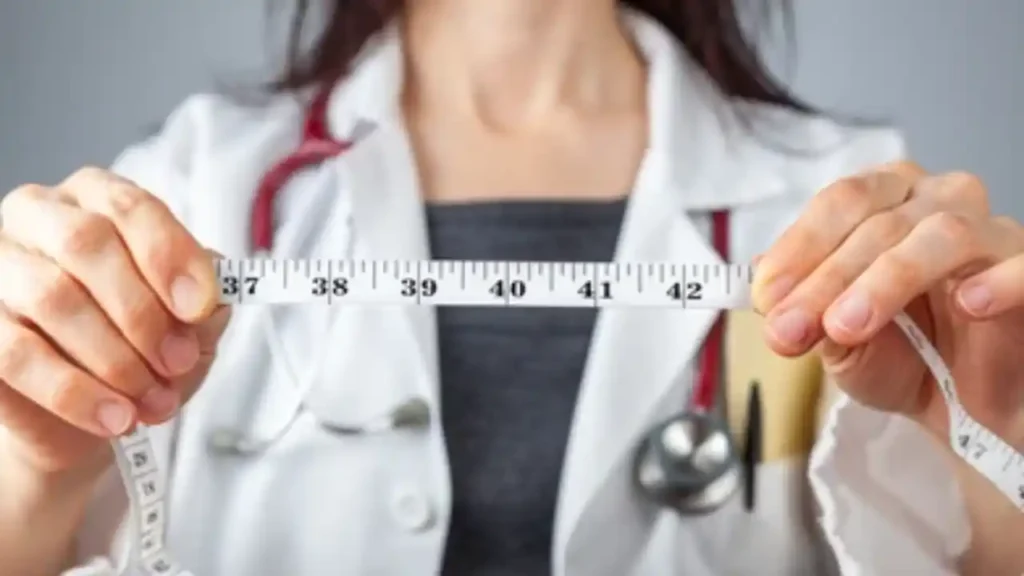
There’s a good chance you’ve plugged your numbers into a BMI calculator and felt the result just didn’t add up. Maybe you’re active, eating well, and feeling strong — but the number still calls you “overweight.” That happened to me, and it pushed me to find the best alternative to BMI calculator tools that actually reflect real body health. Living in Denver, Colorado, I’ve worked with fitness coaches and registered dietitians who all say the same thing: BMI is a starting point, not a finish line. In this guide, I’m sharing everything I’ve tested, researched, and learned — so you can finally get a clearer, more honest picture of your health.
Why BMI Falls Short for Real Health Measurement
Let me be honest with you. BMI — Body Mass Index — was created in the 1830s by a mathematician, not a doctor. It divides your weight by the square of your height. That’s it. No muscle. No fat location. No age. No gender. Just a ratio.
I remember the first time I got a “high BMI” reading after months of consistent strength training. I was confused. My clothes were looser, my energy was up, and my doctor said I looked healthy. But that number said otherwise. That’s when I started digging into the science — and found that millions of people share this exact frustration.
Common Problems With BMI
BMI has some real blind spots. Here’s what it consistently misses:
- It cannot tell fat from muscle. A muscular person and an untrained person of the same height and weight get the same BMI score — even though their body composition is completely different.
- It ignores where fat is stored. Visceral fat (around your organs) is far more dangerous than subcutaneous fat (under the skin), but BMI doesn’t detect either.
- It doesn’t account for age or sex. A 60-year-old woman and a 25-year-old man can share the same BMI and have wildly different health profiles.
- It produces misleading results for certain ethnic groups. Research shows that Asian populations face higher metabolic risk at lower BMI thresholds than current standard charts reflect.
- It fails athletes entirely. Elite athletes and regular gym-goers often show “overweight” or “obese” BMI scores despite having very low body fat percentages.
If you want to understand BMI calculator limitations in depth, it’s worth exploring how this single metric came to dominate clinical settings — and why that’s changing fast.
Real-Life Example
Think about a 35-year-old man in Denver who lifts weights four days a week, runs on weekends, and eats clean. His BMI might read 27 — labeled “overweight.” Now think about a sedentary office worker of the same height and weight. Same BMI. Completely different health risk. This is exactly why so many experts now call for more nuanced tools.
What Makes a Better Alternative to BMI Calculator
A good replacement for BMI doesn’t just give you a different number. It gives you more useful, actionable data about your actual body composition and health risk.
Key Features to Look For
When I evaluate any body measurement tool, I look for these things:
- Does it measure body fat percentage separately from lean mass?
- Does it account for biological sex, age, and lifestyle factors?
- Is it easy to track consistently over time?
- Does it give insight into fat distribution, especially around the abdomen?
- Is it accessible — can I do it at home, or do I need a lab?
The best tools hit at least three of these. And honestly, combining two or three methods gives you far better data than relying on just one.
Top Alternatives to BMI Calculator (Compared)
Here’s a quick look at how these tools stack up before we go deep on each one.
| Tool | Measures Body Fat | Muscle Insight | Accuracy | Ease of Use |
|---|---|---|---|---|
| Standard BMI | No | No | Low | Very Easy |
| Body Fat % Calculator | Yes | Partial | Medium | Easy |
| Waist-to-Hip Ratio | Yes (distribution) | No | Medium | Very Easy |
| Waist-to-Height Ratio | Yes (distribution) | No | Medium-High | Very Easy |
| Skinfold Calipers | Yes | Partial | Medium | Moderate |
| BIA Smart Scale | Yes | Yes | Medium | Easy |
| DEXA Scan | Yes | Yes | Very High | Hard |
| Hydrostatic Weighing | Yes | Yes | Very High | Hard |
| Bod Pod (Air Displacement) | Yes | Yes | High | Moderate |
| RFM (Relative Fat Mass) | Yes | No | Medium-High | Easy |
| Waist Circumference Alone | Yes (risk only) | No | Low-Medium | Very Easy |
| Lean Body Mass Calculator | Yes (indirect) | Yes | Medium | Easy |
Let’s break each one down the way I wish someone had explained it to me.
Body Fat Percentage Calculator: A Practical Upgrade
This is probably the first tool I’d recommend to anyone stepping away from BMI. It directly measures the proportion of your body that is fat versus everything else — muscle, bone, water, organs.
Why It Works Better Than BMI
When I switched from tracking BMI to tracking body fat percentage, everything clicked. I could finally see the actual impact of my training. The scale might not move much when you build muscle and lose fat simultaneously — but your body fat percentage will drop. That’s real progress that BMI completely hides.
Body fat percentage also gives you clear target ranges based on your goals. For general health, most guidelines suggest:
- Women: 20–35% is healthy; athletes often sit at 14–20%
- Men: 10–25% is healthy; athletes often sit at 6–13%
How to Use a Body Fat Percentage Calculator
Most online tools use the U.S. Navy Method, which requires just a few measurements:
- Your height
- Your neck circumference
- Your waist circumference
- For women: hip circumference as well
No equipment beyond a tape measure. No gym required. I check mine every few weeks rather than daily, which gives me a cleaner trend to follow.
For those curious about how these overlap with other tools, the article on BMI calculator with body fat percentage breaks down how they can work together.
Personal Insight
I’ll admit — when I first started measuring body fat, the number surprised me. I thought I was doing well. But seeing a real data point shifted my focus from “weigh less” to “lose fat, keep muscle.” That mental shift alone changed how I trained and ate. It’s a more honest conversation to have with yourself.
Waist-to-Hip Ratio: Simple but Surprisingly Powerful
You don’t need a fancy app for this one. A tape measure and 60 seconds is all it takes.
What It Measures and Why It Matters
Waist-to-hip ratio (WHR) is calculated by dividing your waist measurement by your hip measurement. It’s a direct indicator of fat distribution — specifically whether you carry more fat around your abdomen (apple shape) versus your hips and thighs (pear shape).
Why does fat distribution matter? Because abdominal fat — the kind packed around your organs — is strongly linked to metabolic syndrome, type 2 diabetes, cardiovascular disease, and high blood pressure. This is visceral fat, and it’s the dangerous kind. Your hips can carry more fat with considerably less metabolic risk.
The World Health Organization considers these thresholds to indicate increased health risk:
- Men: WHR above 0.90
- Women: WHR above 0.85
How to Measure It Correctly
Stand relaxed. Measure your waist at the narrowest point, usually just above your belly button. Measure your hips at the widest point across your buttocks. Divide waist by hips. Done.
When I first started tracking this, I found it far more motivating than BMI. Seeing that ratio drop as I focused on core training and diet adjustments felt tangible in a way that BMI never did.
Waist-to-Height Ratio: The Underrated Method Experts Love
If I could only pick one simple measurement for the average person, this might be it.
Why Researchers Prefer This Method
Waist-to-height ratio (WHtR) has gained serious attention in clinical research over the past two decades. The rule is beautifully simple: your waist circumference should be less than half your height.
What makes it special is that this benchmark holds up across different ethnicities, age groups, and both sexes. A study published in the journal Obesity Reviews found WHtR to be a better predictor of cardiometabolic risk than BMI in multiple population groups.
The target: WHtR below 0.5 for most adults. Above 0.6 is considered high risk.
Real-Life Context
A nutrition coach I spoke with put it this way: “Your waist measurement tells you more about your cardiovascular risk than your weight ever will. Keep your waist to less than half your height, and you’re already ahead of the curve.”
That’s advice I’ve kept front of mind. It’s also worth noting that women, who naturally carry more fat around the hips and thighs, often find this ratio more reassuring than BMI — because it focuses specifically on abdominal fat, not total weight. You can learn more about how these metrics interact in the BMI for women guide on the site.
Skinfold Calipers: Old School but Still Reliable
This method has been used by athletic trainers and coaches for decades. It’s hands-on, it takes a bit of practice, and when done correctly, it gives surprisingly good results.
How Skinfold Measurement Works
A trained tester uses calipers — a pinching tool — to measure the thickness of fat under the skin at specific sites on the body. Common sites include the tricep, abdomen, subscapular (under the shoulder blade), and thigh. These measurements are then plugged into a formula to estimate total body fat percentage.
The key word there is “trained.” Inconsistent technique is the biggest problem with calipers. Two different people measuring you can get noticeably different results. But if you use the same person every time — ideally a fitness professional — you get a reliable trend.
Pros and Cons
Skinfold calipers are cheap. You can buy a decent pair for under $10. That’s a major advantage over lab-based methods. But they do have limitations:
- Accuracy depends heavily on the skill of the tester
- Very high body fat levels can be hard to measure accurately
- They don’t measure visceral fat at all — only subcutaneous fat
Still, for gym-goers who want regular body composition tracking on a budget, this is a solid option. Especially if you’re working with a personal trainer who can measure you consistently each month.
Bioelectrical Impedance Analysis (BIA): Smart Scale Technology
You’ve almost certainly seen these scales in gyms, pharmacies, or friends’ bathrooms. They send a tiny, painless electrical current through your body and measure how quickly it travels. Fat slows the current; muscle and water conduct it faster.
What BIA Measures
A quality BIA device gives you:
- Body fat percentage
- Skeletal muscle mass
- Visceral fat level (estimated)
- Body water percentage
- Bone mass (estimated)
- Metabolic age (based on muscle and fat composition)
That’s a lot of data for stepping on a scale. And for most people, that data is motivating and trackable over time.
What I Learned From Using One Daily
Here’s something important I discovered: BIA readings fluctuate significantly based on hydration. I once stepped on my smart scale in the morning after a well-hydrated night and got one body fat reading. That same evening, after a long day and less water, the reading was nearly 3% higher. Same day. Same body.
The lesson: always measure under the same conditions. I measure first thing in the morning, after using the bathroom, and before eating or drinking anything. That consistency makes the trends meaningful.
For those weighing up options, the piece on BMI scales worth buying for tracking gives detailed product guidance. And if you want to understand the mechanics behind smart scales, how BMI smart scales calculate body fat is a great read.
DEXA Scan: The Gold Standard for Body Composition
If precision is what you’re after, nothing in the civilian world beats a DEXA scan (Dual-Energy X-ray Absorptiometry). This is the tool researchers use as a benchmark when testing all other methods.
What Makes DEXA So Accurate
A DEXA scan uses two low-dose X-ray beams to distinguish between three tissue types: fat mass, lean mass (muscle, organs, connective tissue), and bone mineral density. It takes about 10 minutes lying still on a table. The result is a detailed body composition map — literally showing you where fat and muscle are distributed across your body.
You’ll see your arms, legs, and trunk measured separately. That regional breakdown is incredibly useful for understanding asymmetries and health risks that total-body numbers can’t reveal.
The Downside
Cost and access are real barriers. A DEXA scan typically runs between $50 and $150 at a specialized clinic. Some universities and sports performance centers offer them, but they’re not available everywhere. And while the radiation exposure is minimal (less than a chest X-ray), it’s still something to consider.
I got one done in Denver a couple of years ago and found it genuinely eye-opening. I had more visceral fat than I expected, despite looking lean. That data directly shaped my dietary choices for the following six months.
Hydrostatic Weighing: Science-Backed Underwater Testing
This one sounds odd until you understand the physics. Lean tissue is denser than water; fat tissue is less dense. By weighing you in and out of water, technicians can calculate your body density — and from that, your body fat percentage.
How the Process Works
You sit on an underwater scale inside a tank, exhale as much air as possible, and submerge for a few seconds while your weight is recorded. This is repeated several times to get an average. The process is a bit awkward — fully exhaling while submerged takes practice — but the accuracy is excellent.
Hydrostatic weighing has long been considered a gold standard alongside DEXA, though DEXA has largely surpassed it in clinical settings due to convenience. Universities with exercise science programs are the most common places to find this service.
Air Displacement Plethysmography (Bod Pod): Modern and Accessible
The Bod Pod is the more user-friendly cousin of hydrostatic weighing. Instead of water, it uses air displacement inside an egg-shaped chamber to measure body density and calculate body composition.
Why It’s Worth Considering
The Bod Pod is quick (about 5 minutes), non-invasive, and very accurate. It works well for people who can’t or don’t want to be submerged in water. Children, older adults, and people with injuries can all use it comfortably.
Accuracy is comparable to hydrostatic weighing and only slightly below DEXA. It’s available at many university sports science labs and some clinical fitness centers.
The main limitation is cost — similar to DEXA — and access. But if one is nearby and you want a one-time precise baseline measurement, it’s worth the trip.
Relative Fat Mass (RFM): The Newest Formula-Based Alternative
Developed in 2018 by researchers at Cedars-Sinai Medical Center, the Relative Fat Mass (RFM) index is getting real attention as a BMI replacement that’s simple and more accurate.
How RFM Is Calculated
The formula uses just your height and waist circumference:
For men: RFM = 64 − (20 × Height / Waist Circumference) For women: RFM = 76 − (20 × Height / Waist Circumference)
Research published in Scientific Reports found RFM to be a better predictor of body fat percentage — measured by DEXA — than BMI or waist circumference alone. It also showed less bias across different ethnicities.
This is a tool you can calculate in under a minute with a tape measure. For many people, it’s the most balanced formula-based option available right now — and I expect it to become more mainstream in the next few years. The conversation around making a BMI calculator more accurate and useful often points to tools like RFM as the logical next step.
Lean Body Mass Calculator: Understanding What You’re Made Of
Lean body mass (LBM) refers to everything in your body that isn’t fat: muscles, bones, organs, water, and connective tissue. Calculating it gives you a clearer picture of how your body responds to training and nutrition changes.
Why Tracking Lean Mass Matters
When you diet without tracking lean mass, you risk losing muscle along with fat. That’s a problem. Muscle is metabolically active tissue — it burns calories at rest, supports your joints, and keeps you functional as you age.
A lean body mass calculator uses your total weight and body fat percentage to estimate how much of your body is lean tissue. For example:
- Total weight: 180 lbs
- Body fat: 25% (45 lbs of fat)
- Lean body mass: 135 lbs
Tracking this over months shows whether your interventions are actually preserving or building muscle. This is especially relevant if you’re combining diet and exercise to change your body composition. For anyone focused on building strength, the resource on BMI calculator for muscle gain tracking is a natural companion read.
Which BMI Alternative Is Best for You?
Honestly, the right tool depends on your goals, budget, and how much data you want to manage. Here’s a practical guide:
| Your Goal | Best Tool |
|---|---|
| Quick daily awareness | Waist-to-Height Ratio |
| Weight loss tracking | Body Fat % Calculator |
| Fitness progress | BIA Smart Scale |
| Clinical precision | DEXA Scan |
| Budget-friendly regular tracking | Skinfold Calipers |
| Cardiac risk assessment | Waist-to-Hip Ratio |
| One-time accurate baseline | Hydrostatic Weighing or Bod Pod |
No single tool is perfect. The smartest approach is to combine two or three methods that complement each other.
Real-Life Routine: How I Combine These Methods for Accuracy
Over the years, I’ve landed on a routine that gives me consistent, useful data without becoming obsessive about numbers.
My Weekly and Monthly Tracking System
Every morning (Sunday is my anchor day):
- I step on my BIA smart scale — same time, same conditions. I log the reading but focus on the monthly trend, not the daily number.
Every two weeks:
- I take waist and hip measurements with a fabric tape measure. I also check my waist-to-height ratio.
Every two to three months:
- I run through a body fat percentage calculation using the Navy Method online.
Once or twice a year:
- If I’m making a major change (new training block, significant dietary shift), I’ll do a DEXA scan for a clean baseline.
This routine takes less than five minutes per week most of the time. But it gives me a far richer picture than BMI ever did.
Why Consistency Matters More Than Precision
Here’s the thing I wish I’d understood earlier: it’s not the single reading that matters. It’s the trend. A 3-month downward trend in body fat percentage, even measured by an imperfect tool, tells a much more honest story than a perfect reading taken once. Experts consistently reinforce this. Focus on direction, not destination.
Common Mistakes When Using These Alternatives
Even good tools give bad data if used incorrectly. Here are the mistakes I see most often — including some I’ve made myself.
Measuring at Different Times of Day
Your weight, body water, and even circumference measurements shift throughout the day. Morning versus evening can mean a difference of several pounds and a few percentage points in body fat. Pick a time and stick to it — every single time.
Not Accounting for Hydration
This is the biggest issue with BIA smart scales in particular. Alcohol the night before, a heavy workout, high sodium intake, or simply not drinking enough water all change your body water percentage — which directly affects the electrical reading. Always measure under neutral conditions.
Comparing Results Across Different Tools
If you got 22% body fat from a DEXA scan and 26% from a BIA scale, that doesn’t mean either is wrong — it means they use different methods with different error margins. Never compare absolute numbers across different tools. Compare the same tool’s readings over time.
Ignoring Context
Numbers without context are just numbers. A drop in body fat percentage matters more if it happened while maintaining or increasing lean mass. A rise in waist circumference matters more if it’s paired with other metabolic risk factors. Always read your data in the context of your lifestyle, health history, and goals.
Expert Tips for Tracking Body Health Accurately
I’ve compiled the most consistent advice I’ve heard from fitness coaches, registered dietitians, and exercise physiologists over the years.
| Tracking Tip | Why It Matters |
|---|---|
| Measure at the same time each day | Reduces variability from daily fluctuations |
| Use the same tool consistently | Allows apples-to-apples trend comparison |
| Focus on 3-month trends | Filters out noise from daily and weekly swings |
| Combine at least two methods | Cross-validates data and reduces single-tool error |
| Log measurements alongside lifestyle notes | Helps you understand what’s driving changes |
| Avoid measuring during hormonal shifts (for women) | Can cause misleading water retention readings |
One of the most grounding things I’ve been told: “Your 3-month trend is your truth. Everything else is just noise.”
Understanding your body composition in depth — including how fat, muscle, and water interact — makes these tracking habits even more powerful. And as you shift your approach, the strategic weight management framework on this site can help you build a plan that actually fits your life.
How Age and Life Stage Change Which Tool You Should Use
One thing that doesn’t get enough attention: the best measurement tool for you at 25 isn’t necessarily the best one at 45 or 65. Your body composition changes with age, and so should your tracking approach.
In Your 20s and 30s
You’re likely building lean mass, recovering quickly, and have lower baseline cardiovascular risk. Body fat percentage tracking and BIA scales work great here. You’re establishing your baseline.
In Your 40s and 50s
Muscle mass naturally begins to decline (a process called sarcopenia). Visceral fat tends to increase, especially around menopause for women. Waist measurements become more important here — both the waist-to-height ratio and the waist-to-hip ratio give you early warning signals. The BMI changes every life stage article explores this in more detail.
In Your 60s and Beyond
Lean body mass preservation is the priority. DEXA scans are particularly valuable at this stage because they also measure bone density — a major health concern for older adults. Waist circumference alone can also serve as a practical daily check.
The Role of Technology in Modern Body Composition Tracking
We’re living through a golden age of health technology, and body composition tracking has benefited enormously. Tools that used to require a clinic visit are now available in your bathroom or on your wrist.
Smart Scales and Apps
Modern BIA smart scales sync with smartphone apps to track trends over time. Some even use multiple frequencies of electrical current (multi-frequency BIA) for better accuracy. The best apps visualize your trends over weeks and months, which makes it much easier to interpret the data meaningfully.
Wearables
Devices like advanced fitness trackers now estimate cardiovascular fitness, resting metabolic rate, and even stress levels. While they don’t directly measure body fat, they give valuable context around activity levels, sleep quality, and heart rate variability — all of which correlate with body composition over time.
AI and Health Predictions
The future of wellness is moving toward AI-powered health tracking that synthesizes multiple data streams. The piece on the future of wellness covers how AI is being used to improve health tracking for women in particular — and it’s a fascinating look at where all of this is heading.
Final Recommendation
After years of testing tools, reading research, and talking to health professionals, here’s where I’ve landed — and what I’d tell anyone starting this journey.
Stop treating BMI as your primary health metric. It’s a rough screen at best, and a misleading one for a large portion of the population, especially if you exercise regularly, have a muscular build, or belong to an ethnic group for which Western BMI thresholds were never calibrated.
Start with waist-to-height ratio. It’s free, takes 30 seconds, and is backed by strong research. If your waist is more than half your height, that’s your first signal to make changes — no calculator required.
Add a body fat percentage tracker. Use the Navy Method online or get a BIA smart scale. Measure consistently and look at your 3-month trend.
Use DEXA once in a while. If you’re making a major body composition change — a serious training program, a significant dietary shift — get a DEXA scan to establish a clean before-and-after picture. It’s worth the investment.
Combine and compare. No single tool is perfect. The most accurate picture comes from two or three methods pointing in the same direction.
Most importantly: focus on progress, not perfection. Your health is a lifelong trend, not a single number on a scale or a formula. The tools in this guide are only useful if they help you take better actions — eat better, move more, sleep more, stress less. That’s the real health metric.
If you’re still exploring how different calculators and tools fit your specific situation, the collection of resources on best BMI calculator tools is a good place to continue the conversation. And if you’re actively working toward weight loss, the best BMI calculator for weight loss guide pairs well with the body fat tracking approaches covered here.
Your body deserves a better measurement. Now you have the tools to get one.
FAQs for Focus Keyword: Best Alternative to BMI Calculator
What is the best alternative to BMI calculator for at-home use?
Using a tape measure is the best alternative to BMI calculator for home use. It quickly tracks harmful tummy fat. Have you measured your waist today to check health risks?
How does the waist-to-hip ratio compare to BMI?
The waist-to-hip ratio is a top alternative to BMI because it shows where fat is stored. It looks at your body shape and health risks. Calculate yours to find out more.
Can a body scan replace a BMI calculator?
Yes, a body scan is very exact and fast. It is the best alternative to BMI calculator for learning your true body fat, muscle, and bone mass. Would you try one soon?
Why use the Body Roundness Index instead of BMI?
The Body Roundness Index predicts health risks by analyzing body shape. It is a great alternative to BMI calculator for checking central fat. Learn more about it today.
Are smart scales a good alternative to BMI?
Smart scales measure your body fat levels. They are a good alternative to BMI calculator for tracking trends over time. Why not test your daily wellness habits this way?
Does a skinfold caliper test work well?
Skinfold calipers are a very cheap and easy alternative to BMI calculator. They use a quick pinch test to estimate your body fat. Will you give this method a try today?
How do you measure waist-to-height ratio?
Divide your waist size by your total height. This popular alternative to BMI calculator helps predict health risks well. Try checking if your waist is half your height.

Shakitul Alam is the CEO, Owner, and Co-founder of BMI Calculator Women AI. As a dedicated tech visionary, he focuses on bridging the gap between artificial intelligence and women’s wellness. Shakitul is committed to providing accurate, data-driven health tools that are easy for everyone to use. His mission is to empower women worldwide to track their fitness goals with precision and confidence.