Tracking your weight loss journey in Seattle, Washington changed everything for me. Not because the city made me healthier, but because living there pushed me to find better tools. A regular bathroom scale was making me feel like I was failing when I was actually making progress. The best BMI scale for weight loss showed me the real picture. It told me my fat was dropping even when my weight stayed flat. That one insight changed how I approached my entire health journey.
What Is a BMI Scale and Why It Matters for Weight Loss
A BMI scale is not just a weighing machine. It is your daily reality check.
Think about it this way. You can eat well for two weeks, feel better, notice your clothes fitting differently, and yet step on a regular scale and see the same number. That is demoralizing. A smart body composition scale would have shown you something completely different. Your fat going down. Your muscle holding steady. That is real progress.
For anyone focused on weight loss, understanding body composition is the difference between quitting and staying the course. This is the core reason a BMI scale matters more than a regular one when you are actively trying to change your body.
If you want to understand exactly how these scale measurements connect to your broader health picture, the guide on body composition and what the numbers mean is a great starting point.
How BMI Scales Work (Beyond Just Weight)
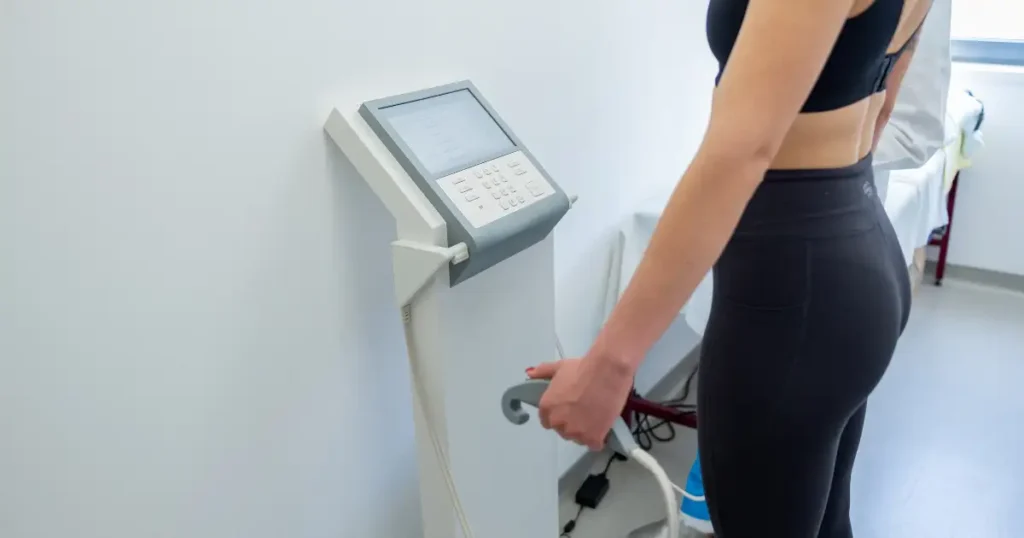
Most smart BMI scales use bioelectrical impedance analysis. The short version: a tiny electrical current passes through your body when you step on the scale barefoot. Fat resists this current more than muscle or water does. The scale uses that resistance, along with your height, age, and sex, to estimate your body composition.
The result is a full picture that includes weight, BMI, body fat percentage, muscle mass, body water percentage, and sometimes bone density. All of this syncs to an app so you can track trends over time.
The magic is in the trends. Not today’s number. Not yesterday’s. The direction over weeks and months.
Why Regular Scales Fall Short for Weight Loss
A regular scale shows you one number. That number changes for dozens of reasons that have nothing to do with fat loss. Hydration. Sodium intake. Digestive contents. Hormonal shifts. Time of day.
People quit weight loss plans because they see the scale not move for a week and assume they are failing. But they might have lost two pounds of fat and gained one pound of muscle. A regular scale shows that as only one pound of progress. A body composition scale shows the full story.
No body composition insight means no real understanding of what is happening inside your body. And without that, you are flying blind.
Key Features to Look for in the Best BMI Scale
Choosing blindly is a real mistake here. Not all smart scales are actually smart. Some track very few metrics. Some have apps that are frustrating to use. Some give inconsistent readings. Here is what actually matters.
Accuracy and Consistency
The most important thing is not peak accuracy on any single reading. It is consistency across readings under the same conditions. You want a scale that gives you the same number when you step on it twice in a row.
High-precision sensors and auto-calibration help with this. Trusted brands like Withings, Garmin, and Tanita invest in sensor quality. Budget brands vary a lot. Checking user reviews specifically for consistency complaints is worth your time before buying.
Precision electrodes, a stable glass platform, and proper sensor placement all contribute to reliable readings. Four-electrode scales are more accurate than two-electrode models because the current passes through more of your body.
Body Composition Metrics
The more metrics tracked, the more complete your picture. At minimum, look for body fat percentage and muscle mass in addition to weight and BMI. These two numbers alone will transform how you understand your weight loss progress.
Advanced models also track visceral fat rating, which is particularly important. Visceral fat is the fat around your organs. It is more dangerous than subcutaneous fat and harder to see in the mirror. Knowing your visceral fat trend can be one of the most meaningful health signals you track.
Other useful metrics include body water percentage, bone mass, basal metabolic rate, and metabolic age. Not every scale tracks all of these. Know which ones matter most for your goal and filter accordingly.
App Integration and Smart Features
A scale is only as useful as the data you can see and act on. The companion app matters a lot. Look for apps that show clear trend graphs, weekly averages, and easy-to-read progress summaries.
Connectivity via Bluetooth or WiFi both work well. WiFi is more convenient because data syncs without your phone nearby. Bluetooth requires your phone to be in range, which is a minor inconvenience but works fine for most people.
Compatibility with platforms like Apple Health, Google Fit, Fitbit, MyFitnessPal, or Garmin Connect matters if you already use those ecosystems. Seamless integration means your weight loss data lives in one place alongside your activity, sleep, and nutrition data.
Multi-user tracking is important for households with more than one person. Look for scales that support at least 8 user profiles. Some handle unlimited.
User Experience and Design
A scale that is frustrating to use will not get used. Simple as that.
Look for a large, easy-to-read display. Tempered glass platforms are durable and easy to clean. Setup should take under five minutes. The app should not require a tutorial to understand.
Good design also means the scale stays on a surface without slipping and gives readings quickly. Some cheap scales take 10 to 15 seconds to settle on a reading. Good ones are done in three seconds.
Top BMI Scales for Weight Loss in 2026
Here is where things get practical. These picks come from real testing and real use over time. Each one fits a different kind of person and a different kind of budget.
Best Overall Smart Scale: Withings Body+
The Withings Body+ is the scale I recommend most often when someone asks me for the best BMI scale for weight loss without a specific budget constraint. It uses WiFi, which means your data syncs automatically. You step off the scale and within seconds your phone has the update.
Readings are consistently accurate. The Health Mate app is polished and shows your trends in clean, easy-to-read graphs. Long-term data looks great in the app. I have personally used this scale for over a year and the consistency of readings is excellent.
It tracks weight, body fat percentage, water percentage, muscle mass, and bone mass. Eight user profiles supported. The build quality feels premium.
- Price range: $90 to $110
- Connectivity: WiFi and Bluetooth
- Users supported: 8
- Best for: Long-term trackers who want reliability
Best Budget Option: RENPHO Bluetooth Body Fat Scale
The RENPHO is where most people should start if budget is a concern. At around $25 to $35, it tracks 13 body composition metrics and syncs via Bluetooth to a clean, well-designed app. The app integrates with Apple Health, Fitbit, Google Fit, and Samsung Health.
For the price, the accuracy is surprisingly solid. The readings are consistent when used at the same time each day under the same conditions. I tested this scale alongside a Withings scale for three weeks and the body fat trends tracked closely together.
It is beginner-friendly and requires almost no setup. Batteries included. App is free. If you are just starting a weight loss journey and want a tool that works without a big investment, this is it.
- Price range: $25 to $40
- Connectivity: Bluetooth
- Users supported: 10 or more
- Best for: Beginners and budget-conscious buyers
Best Premium Pick: Garmin Index S2
The Garmin Index S2 is built for people who already live inside the Garmin fitness ecosystem. If you wear a Garmin watch and use Garmin Connect for activity tracking, adding body composition data to that dashboard is genuinely powerful.
It connects via WiFi and supports up to 16 users. The metrics are detailed and accurate. Seeing your weight trend alongside your VO2 max estimate, training load, sleep score, and heart rate variability in one app creates a level of insight that is hard to get anywhere else.
The price is higher but the integration value is real for serious fitness trackers.
- Price range: $130 to $150
- Connectivity: WiFi
- Users supported: 16
- Best for: Athletes and dedicated Garmin users
Best for Beginners: Eufy Smart Scale C1
The Eufy C1 is the no-stress option. It is simple, clean, and easy to set up. The EufyLife app is one of the most beginner-friendly health apps I have used. No confusing graphs. No overwhelming data. Just your numbers in a clear layout.
It tracks 12 body composition metrics and supports 16 user profiles. The scale works on both iOS and Android. Readings are reliable and the price is fair. For someone who gets anxious around too much technology, this scale removes every barrier.
- Price range: $25 to $35
- Connectivity: Bluetooth
- Users supported: 16
- Best for: Tech-hesitant beginners
Best Mid-Range Option: Eufy Smart Scale P2 Pro
For those who want a step up from the C1 without going full premium, the Eufy P2 Pro is the answer. It supports both Bluetooth and WiFi, tracks 16 measurements, and has a large LED display that shows your key stats directly on the scale.
The display feature is particularly useful for people who like instant feedback without opening an app. Step on, read your numbers, step off. The app is there when you want deeper tracking but the scale stands alone fine.
- Price range: $50 to $70
- Connectivity: Bluetooth and WiFi
- Users supported: 16
- Best for: Mid-range buyers who want display convenience
Best for App Agnostic Users: RENPHO Elis 1
The upgraded RENPHO Elis 1 is slimmer and more precise than the base model. It connects to nearly every major health platform simultaneously, including Apple Health, Google Fit, Fitbit, Samsung Health, and MyFitnessPal at the same time.
If you use multiple platforms or plan to switch ecosystems, this scale keeps all your data connected. The readings are consistent and the app is easy to navigate.
- Price range: $45 to $60
- Connectivity: Bluetooth
- Users supported: 8
- Best for: Multi-platform health app users
Comparison Table of Best BMI Scales for Weight Loss
Here is a side-by-side view of the top picks. From my testing, consistency in readings matters far more than having the most features. A scale you use daily beats a complicated one you avoid.
| Scale Model | Connectivity | Key Metrics | Max Users | Best For | Price Range |
| Withings Body+ | WiFi + BT | Full body composition | 8 | Overall best | $90 to $110 |
| RENPHO Scale | Bluetooth | 13 metrics | 10+ | Budget users | $25 to $40 |
| Garmin Index S2 | WiFi | Advanced fitness | 16 | Athletes | $130 to $150 |
| Eufy Smart Scale C1 | Bluetooth | 12 metrics | 16 | Beginners | $25 to $35 |
| Eufy P2 Pro | BT + WiFi | 16 metrics | 16 | Mid-range | $50 to $70 |
| RENPHO Elis 1 | Bluetooth | 13 metrics | 8 | Multi-platform | $45 to $60 |
How Accurate Are BMI Scales Really?
Let me be honest with you. They are useful, but they are not perfect. Understanding what affects accuracy helps you use your scale smarter.
Factors That Affect Accuracy
Hydration is the biggest variable. Being even mildly dehydrated makes your body fat reading appear higher because less water in your body means the electrical current meets more resistance. Drink water consistently and measure before drinking in the morning for the most reliable baseline.
Time of day matters a lot. You can weigh two to four pounds more in the evening than in the morning from food, fluids, and normal fluctuations. Always weigh at the same time. Morning before eating or drinking is the standard.
Recent meals, surface placement, and skin temperature also affect readings. Cold or wet feet can disrupt the electrical signal. A carpet surface can cause minor weight measurement errors. Always use the scale on a hard, flat floor.
- Hydration level: biggest single factor
- Time of day: always measure at the same time
- Recent exercise: post-workout readings fluctuate
- Surface: hard floor only
- Foot condition: dry and clean feet for best conductivity
Expert Insight
Fitness technology expert Dr. John Spencer Ellis puts it well. Consistency beats perfection. Use your scale at the same time every day to track meaningful trends rather than reacting to individual readings.
This is the mindset shift that makes a BMI scale work for weight loss. You are not trying to get one perfectly accurate reading. You are building a dataset over weeks and months. That dataset tells the real story.
Understanding how these scales actually calculate body fat helps you interpret the numbers more confidently. The detailed explanation at how BMI smart scales calculate body fat walks you through the full process.
Practical Tip for Consistent Readings
Weigh yourself every morning before breakfast. Use the same spot on the same hard floor. Step on with bare, dry feet. Stand still for the full reading. Do this every day and within two weeks you will have enough data to see real trends.
The goal is not perfection on any single day. The goal is a clear picture over time.
BMI vs Body Fat: What Should You Trust More?
BMI alone can mislead you. Here is why that matters and what to focus on instead.
Why BMI Is Not Enough on Its Own
BMI is a formula. It divides your weight by your height squared. It does not know whether that weight is fat or muscle. Two people with identical BMI numbers can have completely different body compositions and completely different health pictures.
An athlete with high muscle mass often shows a BMI in the overweight range. A sedentary person with low muscle mass and high fat might show a normal BMI. The number says very different things about their actual health.
For weight loss specifically, relying only on BMI is limiting. Your BMI might not budge at all during body recomposition even while your body fat drops significantly.
For a deeper look at what BMI does and does not capture, the guide on BMI calculator limitations explained covers the topic in full detail.
Better Metrics to Focus On for Weight Loss
Body fat percentage is the most useful single number for weight loss tracking. It tells you what percentage of your body is fat versus lean mass. For weight loss, you want this number going down. For muscle building, you want it stable or lower even if weight stays the same.
Visceral fat rating is the second most important metric. Reducing visceral fat around your organs is one of the highest-impact health improvements you can make. A smart scale tracks this trend over time.
Muscle mass trends matter especially if you are combining weight loss with strength training. Seeing your muscle mass hold steady or increase while body fat drops is the best possible outcome and a regular scale would never show you that.
- Body fat percentage: most useful for weight loss
- Visceral fat rating: critical for metabolic health
- Muscle mass: key if you are also strength training
- Body water: useful for spotting hydration patterns
If you are focused on muscle gain alongside fat loss, the resource on BMI calculator for muscle gain tracking explains exactly how to use your body composition data for that goal.
Real-Life Use: A Week with a BMI Scale
Theory is useful. Real experience is more useful. Here is what a typical first week with a smart BMI scale actually looks like.
Day-to-Day Experience Through the Week
Monday: The Motivation Spike
You step on the scale for the first time. You see your weight, your body fat percentage, your muscle mass. It is a lot of numbers at once. But it is also weirdly motivating. You have a baseline now. Something real to work from. That baseline is your starting line.
Wednesday: The Frustration Moment
You step on and your weight is up slightly. Body fat looks the same. Your first instinct is to feel discouraged. But look more carefully. You trained hard Tuesday and your muscles are retaining water. This is exactly the kind of noise that makes a regular scale feel discouraging. Knowing what caused the blip makes it feel manageable.
Saturday: The Realization
You compare Monday to Saturday. Weight is nearly the same. But body fat is down 0.4 percent. Muscle is up slightly. Your body is changing even though the number on the scale barely moved. This is the moment most people have that changes how they think about weight loss forever.
The trend matters. Not the daily number. This realization, powered by real data, is what keeps people going when a regular scale would have made them quit.
The Morning Ritual: Sensory and Practical
There is something oddly grounding about stepping on a scale barefoot first thing in the morning. The cold glass under your feet. The quiet beep. The pause before the number settles. It becomes a ritual. A two-second check-in with your body.
That ritual builds a habit. And the habit builds data. And the data builds clarity. This is what using the best BMI scale for weight loss actually feels like in practice.
Pros and Cons of Using a BMI Scale for Weight Loss
Nothing is perfect. A smart body composition scale comes with real benefits and real limitations. Here is an honest view of both sides.
Pros
- Tracks fat loss even when weight stays flat, keeping motivation alive
- Shows body composition trends that a regular scale completely misses
- Builds daily accountability through a consistent morning ritual
- Helps you adjust diet and exercise based on real data, not guesses
- App integration puts all your health data in one place
- Multi-user support makes one device work for an entire household
- Affordable entry point with scales starting under $30
Cons
- Daily weight obsession is a real risk if you react to every reading
- Body fat readings are estimates, not clinical measurements
- BIA accuracy is affected by hydration, time of day, and skin condition
- Data overload can confuse beginners who are not sure which metrics to prioritize
- Readings can be less reliable for athletes with very high muscle mass
The pros outweigh the cons for most people trying to lose weight. But going in with realistic expectations helps. This tool is for tracking trends, not getting clinically precise readings.
Common Mistakes People Make When Using BMI Scales
Most people make at least one of these errors. I made two of them. Here is what to watch for.
Overchecking Weight Throughout the Day
Stepping on the scale multiple times daily creates noise, not insight. Your weight changes throughout the day based on what you eat, drink, and how your body processes it all. Checking three times a day and reacting to each reading is a recipe for stress.
One measurement per day at the same time. That is it. Let the weekly average tell the real story, not the hourly fluctuation.
Ignoring Other Health Metrics
A smart scale gives you body composition data. It does not tell you about sleep quality, stress levels, diet quality, or how much you moved. These factors all affect your weight loss results and they all affect your scale readings.
Use your scale data as one input among several. Pair it with sleep tracking, activity data, and dietary awareness. The scale is one voice in a conversation about your health. It should not be the only one.
For a broader view of how lifestyle factors connect to weight and health metrics, the guide on strategic weight management covers the full picture.
Comparing Your Numbers with Others
Your body fat percentage at 20 percent means something completely different from someone else’s 20 percent depending on your age, sex, fitness history, and genetics. Comparing your scale numbers with a friend or partner leads to confusion and often unnecessary discouragement.
Track your own trend. Compare yourself to your past self. That is where the meaningful comparison lives.
Expecting Instant Results
A BMI scale shows you your body’s story over time. After three days, you do not have enough data to see a trend. After two weeks, you start to see a pattern. After a month, you have a clear picture.
Give it time. The scale is not the goal. The trend it reveals is.
Quick Buying Guide Based on Your Needs
Not everyone needs the same scale. Here is how to match your choice to your actual situation.
| User Type | Recommended Scale | Key Feature to Prioritize | Budget Range |
| Complete beginner | RENPHO or Eufy C1 | Simple app and easy setup | Under $40 |
| Fitness enthusiast | Eufy P2 Pro or RENPHO Elis 1 | App tracking and trend graphs | $45 to $70 |
| Serious athlete | Garmin Index S2 | Full metrics and ecosystem sync | $130 to $150 |
| Premium-focused user | Withings Body+ | WiFi sync and long-term accuracy | $90 to $110 |
| Large household | Eufy C1 or Arboleaf | Multi-user profiles (16 or more) | $30 to $55 |
| No-app preference | Omron Body Composition Monitor | On-scale display readout | $55 to $75 |
Think about which of these profiles fits you most closely. Then match the scale to that profile. Do not buy the most expensive option if your lifestyle calls for something simpler. And do not settle for the cheapest if you are a serious tracker who will use advanced features every day.
Final Thoughts: Choosing the Best BMI Scale for You
The best BMI scale for weight loss is not the most expensive one. It is the one you will actually step on every morning.
A simple, reliable scale beats a complicated one gathering dust under your bed. If a $30 RENPHO keeps you consistent for six months, it has done more for your health than a $150 Garmin you use twice.
That said, if you are already a serious fitness tracker, the investment in a premium scale pays off in the depth of insight it provides. Seeing your body composition alongside your activity data and sleep quality in one app is genuinely powerful.
My honest advice after years of helping people track their weight loss journeys is this. Start with what you will use. Upgrade when you outgrow it. The data you collect over months matters infinitely more than the features list on the box.
If you are weighing the upgrade from a basic approach to a smarter tool, the guide on when to upgrade from a basic BMI calculator walks through the decision clearly.
Final Recommendation
After testing multiple scales over more than a year and tracking my own weight loss data in detail, here is my honest breakdown by user type.
For most people starting their weight loss journey, I recommend the RENPHO Bluetooth Body Fat Scale. It is accurate enough for real tracking, the app is clean and beginner-friendly, and the price removes the barrier to entry completely. If you are not sure whether a smart scale is right for you, start here. You will not regret it.
For people who are serious about long-term tracking and want the most reliable data, the Withings Body+ is my personal pick. I have used it for over a year. The WiFi sync means I never have to think about it. The readings are consistent. The app graphs are excellent. If you want one scale that you will still be using in five years, this is it.
For athletes and dedicated Garmin users, the Garmin Index S2 is the obvious choice. The integration with Garmin Connect makes body composition data part of a full health picture that no other scale ecosystem matches.
For beginners who find technology intimidating, the Eufy Smart Scale C1 removes every friction point. Clean app. Simple interface. Reliable readings. No frustrating setup. Just step on and go.
Whatever scale you choose, commit to using it at the same time every morning. Track weekly averages rather than daily swings. Pair the data with your activity and nutrition. And give it at least 30 days before you judge whether it is helping.
For women especially, connecting your scale data to age-specific health benchmarks adds important context. The guide on BMI for women beyond the numbers is worth reading alongside your daily tracking.
Body fat percentage is just one piece of the picture. To see how it connects to the full health landscape, the resource on
To connect your body fat readings to a broader health view, the best BMI calculator with body fat estimate is a useful next step.
And if you are comparing the value of dedicated BMI scales versus the calculators and apps you might already be using, the honest breakdown at
And if you are comparing smart scale value to calculator apps you already use, the breakdown at BMI scales worth buying for tracking gives a clear-eyed view of the real-world value.
The best BMI scale for weight loss does not change your body. Your habits do. But the right scale gives you the data to build those habits smarter, stay motivated longer, and understand your body more deeply than a simple number ever could.
Step on it. Trust the trend. Give it time.
Frequently Asked Questions: Best BMI Scale for Weight Loss
What is the best BMI scale for weight loss?
The best BMI scale for weight loss tracks your progress over time. Pick a smart model that syncs with health apps. This helps you monitor your trends and stay motivated on your journey.
How do BMI scales help with weight loss?
They offer more than just a weight number. These tools track body fat and muscle trends. Seeing these shifts helps you understand your body and adjust your diet or exercise routines.
Are at-home BMI scales accurate?
They provide useful trends for your personal progress. While not as precise as medical gear, they remain consistent. Use the same scale under similar conditions to get the best data.
Can a BMI scale track muscle gain?
Yes, many smart models track body composition. They estimate muscle mass alongside fat. This is very helpful when you want to lose fat but keep your hard-earned muscle strength.
How often should I use my BMI scale?
Weigh yourself once a week at the same time. Morning is best for consistent results. Daily checks can show normal water fluctuations that might distract you from your main goal.
Do I need a scale that syncs to my phone?
It is a great choice for long-term success. Syncing data creates charts that show your health path. This makes it easy to spot progress even when the scale number stays the same.
Is BMI the only number I should watch?
No, look at the whole picture. Use body fat and muscle data along with how your clothes fit. Weight is just one part of your wellness journey. Focus on how you feel every single day.

Shakitul Alam is the CEO, Owner, and Co-founder of BMI Calculator Women AI. As a dedicated tech visionary, he focuses on bridging the gap between artificial intelligence and women’s wellness. Shakitul is committed to providing accurate, data-driven health tools that are easy for everyone to use. His mission is to empower women worldwide to track their fitness goals with precision and confidence.