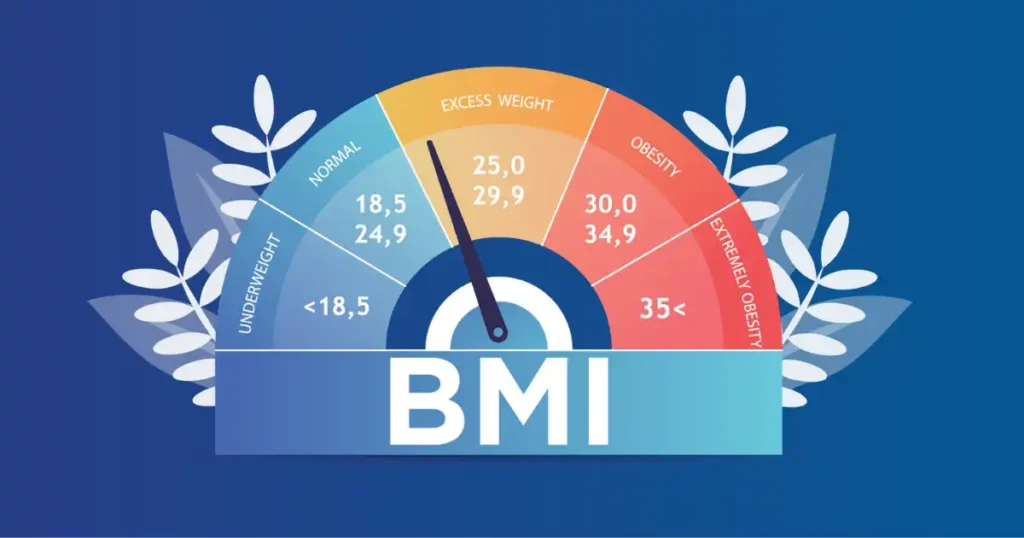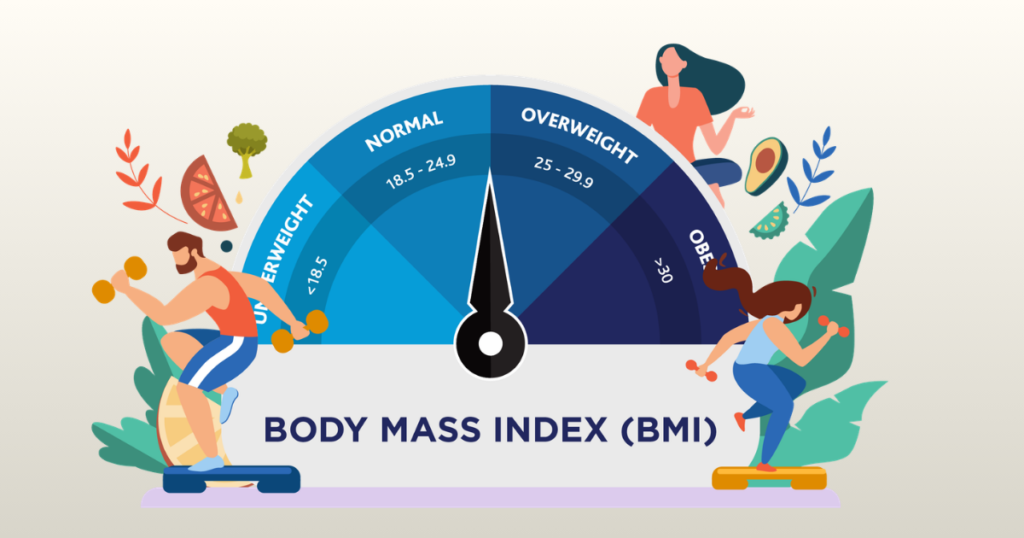

Two calculators. Same height. Same weight. Two different numbers. That happened to me on a Tuesday morning in Seattle, Washington, and it stopped me cold. One said 24.8. The other said 25.2. Those are not the same health category. That experience is what sent me deep into researching the most accurate BMI calculator options available today. If you have ever second-guessed a number on your screen, this guide is for you. I am going to walk you through what actually drives accuracy, which tools earn your trust, and how to use BMI results in a way that genuinely supports your health tracking.
What Does “Most Accurate BMI Calculator” Really Mean?
Most people assume all BMI calculators produce the same result. After all, the formula is the same. But accuracy is about more than running numbers through an equation. It is about how a tool handles input, applies rounding, interprets context, and communicates results.
The Standard BMI Formula: The Baseline
The core formula is weight in kilograms divided by height in meters squared. That is the World Health Organization standard. The Centers for Disease Control and Prevention uses the same formula. Every legitimate calculator starts here.
The formula is universal. But the path from raw inputs to final output involves multiple small decisions that different tools handle differently. Those decisions are where accuracy diverges.
Where Accuracy Starts to Vary
Rounding is the biggest source of variation between calculators. Some tools round your height or weight before running the calculation. Others wait until the final step. That difference can shift your result by a tenth or two, which matters when you are sitting near a classification boundary.
Unit conversion precision is another factor. Converting pounds to kilograms involves a multiplier of 0.453592. Some tools truncate this. Others use full decimal precision. The resulting difference is small but real.
Input flexibility also plays a role. A calculator that forces you to enter whole numbers loses precision immediately. If you weigh 163.4 pounds and the tool rounds you to 163, the output is already slightly off before any formula is applied.
Why Basic Calculators Can Mislead You
Many free online BMI calculators were built for casual use. They ignore age, sex, and ethnicity. They apply a single set of classification ranges to every adult regardless of body type or demographic group. Also, They present the output without any clinical interpretation.
For a quick rough estimate, that is fine. For precision health tracking, it is not enough.
The most accurate BMI calculator does more than run the formula correctly. It handles your inputs with care, applies appropriate context, and gives you a result you can confidently act on.
Key Features That Improve BMI Accuracy
Not all calculators are built the same way. Here is what separates a precision tool from a basic one.
Precision Input Handling
The first place accuracy breaks down is at data entry. A quality calculator accepts decimal inputs for both weight and height. Entering 72.6 kilograms instead of 73 sounds minor, but across a large range of values, those truncations add up.
Support for multiple unit systems matters too. If you measure in pounds and feet but the calculator works natively in metric, it needs to convert your inputs correctly. Some tools do this poorly, and you never know unless you check the output against a manual calculation.
Avoiding early rounding is the most technical but most important feature. The best tools keep full decimal precision throughout the entire calculation and only round at the very last step when displaying the result.
Population-Specific Adjustments
Standard adult BMI ranges were developed from population data that did not represent all groups equally. For that reason, the most accurate BMI tools now offer or at least acknowledge population-specific considerations.
Pediatric BMI is the clearest example. Children and teenagers cannot be assessed using adult classification ranges. Their healthy weight ranges change as they grow, and accurate results require age-and-sex-specific percentile charts. A tool that applies adult categories to a 12-year-old is simply wrong.
Ethnic-specific risk thresholds are increasingly recognized in clinical guidance. Research published in journals including Diabetes Care and the British Medical Journal has shown that Asian populations face elevated metabolic and cardiovascular risk at BMI values that fall within the normal range by standard WHO thresholds. Tools that acknowledge this provide more clinically meaningful results for a significant portion of the U.S. population.
Athlete considerations are another area where standard ranges break down. A well-trained athlete with high lean mass may have a BMI in the overweight range while carrying a body fat percentage well within healthy limits. The most accurate tools flag this limitation rather than presenting a misleading classification. Our article on BMI calculator limitations explained covers this in full detail.
Additional Health Metrics That Support Accuracy
The most honest thing a BMI calculator can do is acknowledge what BMI does not measure and offer supplementary data alongside it.
Waist-to-height ratio is easy to calculate and adds meaningful risk information that BMI misses entirely. Body fat estimation using validated equations like the Deurenberg formula adds body composition context. Metabolic risk indicators based on the combination of BMI, waist, and demographic data provide a fuller clinical picture.
A calculator that provides these alongside BMI is not just more accurate. It is more useful.
Top Most Accurate BMI Calculators: Expert Picks for 2026
These are the tools I have tested and tracked over time. I am sharing what actually works, not what looks best on a feature list.
Comparison Table: Best BMI Tools for Accuracy
| Tool | Platform | Accuracy Level | Best For |
|---|---|---|---|
| NIH BMI Calculator | Web | Very high | Clinical reference and documentation |
| CDC BMI Tool | Web | Very high | Standard compliance, pediatric use |
| Omni Calculator | Web | High | Multi-metric and educational use |
| Calculator.net BMI | Web | High | Everyday precision checks |
| BMI Pro App | Mobile | Moderate to high | Personal tracking with visual trends |
NIH BMI Calculator
The National Institutes of Health calculator is one I return to regularly when precision matters most. It is built on U.S. clinical standards and runs the formula with full precision. The interface is clean and free of distractions.
What I appreciate most about the NIH tool is its institutional credibility. When I use it in a context where documentation matters, I trust the result because I trust the source. It does not try to do too much. It calculates BMI correctly, classifies the result clearly, and gets out of the way.
The limitation is that it does not offer pediatric calculation or body fat estimation. For a straightforward adult BMI check with clinical reliability, it is my first choice.
CDC BMI Tool
The CDC calculator is the standard I recommend for anyone working with both adult and pediatric populations. For children and teenagers, it uses age-and-sex-specific percentile charts rather than fixed adult ranges, which is clinically correct.
The adult version is equally reliable. The CDC’s adherence to WHO classification standards means results are consistent with what any U.S. clinician would reference. For public health reporting or documentation that needs to align with federal health guidelines, this is the tool to use.
The interface is not the sleekest. It was built for accuracy and compliance, not user experience. That trade-off is worth it for the precision and credibility it delivers. You can also explore how these tools compare in different use scenarios in our guide on top-rated BMI calculator tools.
Omni Calculator
Omni Calculator earns its place on this list through versatility and transparency. It supports not just BMI but also BMR, ideal body weight, body fat percentage estimation, lean body mass, and waist-to-height ratio, all within the same interface.
The thing I find most valuable about Omni is that it shows its work. You can see the formula being used and understand the logic behind the result. For anyone learning about body composition metrics, that transparency is genuinely educational.
For tracking purposes, Omni works well as a one-stop health metrics calculator. It is not the fastest tool, and the interface takes a moment to navigate if you are new to it. But for users who want depth alongside accuracy, it consistently delivers.
Calculator.net BMI Calculator
Calculator.net is the tool I reach for when I need a fast, reliable result on a shared or unfamiliar device. Nothing to download. No account needed. It loads in seconds and produces accurate results using full decimal precision.
It handles both imperial and metric inputs cleanly and converts between them correctly. For everyday precision checks, it is one of the most dependable free options available.
It does not offer pediatric calculation, trend tracking, or supplementary metrics. For what it does, it does it well.
BMI Pro App
BMI Pro is a mobile-first option that I recommend to people who want to track their BMI over time rather than just check it once. The app stores readings, produces trend graphs, and allows you to set reminders for periodic check-ins.
The visual tracking feature is genuinely useful. Seeing your BMI plotted over six months tells a different story than comparing two individual readings. For personal health monitoring, that longitudinal view adds real value.
The precision is solid for personal tracking purposes. It may not match the institutional-grade accuracy of NIH or CDC tools, but for everyday use and motivation, it is a strong choice.
BMI Classification Reference Table
Even experienced users benefit from having a clean reference. Here is the standard WHO-aligned adult classification, which the most accurate calculators apply consistently.
| BMI Range | Classification | Health Risk Level |
|---|---|---|
| Below 18.5 | Underweight | Elevated nutritional deficiency risk |
| 18.5 to 24.9 | Normal weight | Low risk |
| 25.0 to 29.9 | Overweight | Moderate risk |
| 30.0 to 34.9 | Obesity Class I | High risk |
| 35.0 to 39.9 | Obesity Class II | Very high risk |
| 40.0 and above | Obesity Class III | Severe risk |
One note worth emphasizing: borderline values matter most when assessing accuracy. A result of 24.9 versus 25.1 changes your classification entirely. That is exactly where calculator precision makes a real difference in how you understand your results.
Expert Insight: Can BMI Ever Be Truly Accurate?
Honestly? Not perfectly. And any expert worth listening to will tell you the same thing.
Dr. Steven Heymsfield of Louisiana State University, one of the most cited researchers in body composition science, has consistently noted that BMI is a useful population-level screening tool but is not a direct measure of body fat or health. The formula was developed in the 19th century by a mathematician, not a physician, and was designed for population statistics, not individual assessment.
That does not make BMI useless. It makes it a starting point. Used correctly, it is fast, free, consistent, and widely understood. Those are real strengths. But calling any BMI result definitively accurate requires understanding its limits.
Why BMI Has Structural Limits
The most fundamental limitation is that BMI does not distinguish between fat mass and lean mass. A pound of muscle and a pound of fat weigh the same. A BMI formula cannot tell them apart. This is why athletes routinely show elevated BMI values that do not reflect their actual health status.
Ethnic variation in fat distribution means that the same BMI value carries different risk implications depending on a person’s background. This is not a design flaw that can be fixed by better math. It reflects biological and demographic realities that a single formula cannot fully capture.
Age-related changes in body composition are another limitation. As adults age, muscle mass tends to decline even when weight stays stable. That shift means BMI can look normal while body fat percentage climbs. For older adults, this gap between BMI and actual body composition is clinically significant. You can read more about this in our piece on how BMI changes at every life stage.
What Experts Recommend Instead
The practical answer is not to abandon BMI but to layer additional measurements on top of it.
Waist circumference takes less than a minute to measure and adds cardiovascular risk information that BMI cannot provide. The American Heart Association uses thresholds of 35 inches for women and 40 inches for men as indicators of elevated cardiometabolic risk.
Body fat percentage provides a fuller picture of body composition. It requires either calipers, a bioelectrical impedance device, or a DEXA scan, but the additional information is genuinely useful for anyone tracking health seriously.
Waist-to-height ratio is increasingly supported in research as a better predictor of cardiovascular and metabolic risk than BMI alone. The guideline is simple: keep your waist circumference below half your height. It is fast, free, and meaningfully informative.
BMI vs Other Accurate Health Metrics: Comparison Table
| Metric | Accuracy | Ease of Use | Best Use Case |
|---|---|---|---|
| BMI | Moderate | Very easy | Quick screening, trend tracking |
| Waist-to-Height Ratio | High | Easy | Cardiovascular risk assessment |
| Body Fat Percentage | Very high | Moderate | Fitness and body composition tracking |
| Waist Circumference | High | Easy | Abdominal fat and metabolic risk |
| DEXA Scan | Extremely high | Requires clinical access | Detailed body composition analysis |
The takeaway is not that BMI is unreliable. It is that BMI answers one specific question well, and other metrics answer different questions better. Using them together gives you a more complete picture than any single number can.
How to Choose the Most Accurate BMI Calculator for You
The right tool depends on what you are actually trying to do. A researcher and a casual user do not need the same calculator.
For Everyday Personal Use
Stick to simple tools that handle decimal precision correctly. Calculator.net and the NIH BMI calculator are both solid choices. You do not need extra features if you are just running a periodic check and monitoring your own trend.
Avoid calculators embedded in sites with heavy advertising or unclear sourcing. If a calculator does not tell you the formula it is using or the standards it follows, that is a red flag.
Measure consistently. Same time of day, same scale, same conditions. Your tool can only be as accurate as your inputs.
For Fitness Enthusiasts and Athletes
Look for calculators that offer body fat estimation alongside BMI. Omni Calculator is a strong option here because it handles multiple metrics in one place. Pairing BMI with body fat percentage and lean mass estimates gives you the context to interpret your results correctly.
Wearable and app integration adds ongoing value. If your smart scale syncs with a health app and logs your BMI automatically over time, trend tracking becomes effortless. Our review of BMI calculator apps for accurate health tracking covers the best options in this space.
For Medical and Clinical Reference
Use NIH or CDC tools. Full stop. These are the tools aligned with U.S. clinical standards. For pediatric patients, use the CDC tool specifically because of its percentile-based output.
If you are in a clinical setting and need a tool that integrates with workflow, see our detailed breakdown of the best professional BMI calculator tools for options built with medical use in mind.
For Weight Loss Tracking
Accuracy matters most at the beginning and at key milestones. Use a consistent tool every time so that your trend data is internally comparable. The most accurate BMI calculator for weight loss is the one you use the same way every single time, because consistency in measurement is what makes trend data meaningful.
For goal-setting alongside tracking, our guide on the best BMI calculator for weight loss planning pairs accuracy tips with practical goal frameworks.
Real-Life Scenario: When Accuracy Actually Matters
Saturday morning. Portland, Oregon. Coffee going. You step off the scale and open two different calculator tabs out of curiosity. One says 24.9. The other says 25.2.
Those numbers sit on opposite sides of the overweight threshold. One puts you in the normal range. The other does not. Same person. Same morning. Different tools.
That scenario is not hypothetical. It happens because different calculators handle input rounding differently. And at classification boundaries, a rounding difference of 0.3 changes the label you see on your screen.
This is why I always recommend using the same trusted calculator every time you check. Switching between tools introduces noise into your personal trend data. Pick one that you know handles decimal precision correctly, and stick with it.
Common Mistakes That Reduce BMI Accuracy
The best calculator in the world cannot fix a bad input. These are the mistakes I see most often, and they are all easy to avoid.
Rounding Height or Weight Before Entering
If you are 5 feet 9.5 inches and you enter 5 feet 10, you have already introduced an error before the formula runs. Enter your actual measurements with as much decimal precision as your measuring tool provides.
Measuring at Inconsistent Times
Body weight fluctuates throughout the day by one to four pounds in most adults, driven by hydration, food intake, and activity. Measuring at different times of day across different check-ins makes your trend data less meaningful. Pick a consistent time, ideally first thing in the morning, and stick to it.
Using Different Tools Each Time
Switching calculators between check-ins introduces systematic variation. Even small differences in how tools handle rounding can shift your recorded BMI by a tenth of a point. Over six months of tracking, that inconsistency makes your trend harder to interpret.
Ignoring Measurement Conditions
Hydration level affects body weight, which affects BMI. Weighing yourself after a long run versus after a full meal produces different results. These fluctuations are normal, but they matter if you are comparing readings across time without controlling for conditions.
Treating a Single Reading as Definitive
One BMI number means very little on its own. A trend over weeks and months is what tells the real story. I always encourage people to log at least four or five readings before drawing any conclusions about their weight status.
How Accurate BMI Calculators Handle Special Populations
Standard tools are built for the average adult. But health tracking does not stop at average.
BMI Accuracy for Women
Hormonal fluctuations across the menstrual cycle cause regular changes in water retention and weight. These fluctuations can shift a single BMI reading by a noticeable margin without reflecting any real change in body composition. Tracking BMI at the same phase of the cycle each month produces more meaningful data.
Body composition norms also differ between men and women at equivalent BMI values. Women naturally carry a higher percentage of body fat relative to lean mass at any given BMI. This is physiologically normal and should be part of how results are interpreted. For a deeper look at BMI interpretation specifically for female users, our guide on BMI for women: beyond the numbers is a useful companion resource.
BMI Accuracy for Older Adults
Adults over 65 experience natural changes in muscle mass and bone density that affect how BMI maps to health risk. Research suggests that slightly higher BMI values may be protective in older adults by acting as a buffer against the muscle loss associated with aging. Standard BMI ranges should be interpreted with this in mind for this population.
BMI Accuracy for People with High Muscle Mass
Athletes and highly active individuals regularly show BMI values in the overweight or even obese range due to above-average lean mass. For this group, body fat percentage is a far more meaningful metric. A BMI of 27 in a competitive cyclist means something very different than the same number in a sedentary adult.
Our article on BMI calculator for muscle gain tracking and lean mass goals addresses this specific scenario in practical detail.
Free vs Paid BMI Calculators: Does Paying More Mean Greater Accuracy?
This is a question I get regularly, and my answer is almost always the same. No, paying more does not inherently mean greater accuracy in the calculation itself.
The formula is the formula. A paid app and a free government website use the same math. What paid tools add is surrounding functionality: trend tracking, visual graphs, multi-metric analysis, reminders, and integration with wearables or health platforms.
If calculation accuracy alone is what you need, the NIH and CDC calculators are free and excellent. If you want the full toolkit of tracking features built around that calculation, a paid app may be worth the cost.
Our comparison of free vs advanced BMI calculators breaks down what you actually get at different price points so you can decide what fits your situation.
The Future of Accurate BMI Calculation
The tools available in 2026 are already meaningfully better than what existed five years ago. And the direction of travel points toward continued improvement.
AI-Enhanced Precision
Artificial intelligence is beginning to enter health tracking in ways that could change what BMI accuracy even means. Instead of a static classification based on height and weight alone, AI-integrated tools can incorporate longitudinal data, demographic patterns, and predictive risk modeling to produce personalized health assessments rather than population-average classifications.
Some platforms are already building toward this. The combination of wearable data, body composition metrics, and machine learning models could eventually produce individualized metabolic risk scores that make the binary BMI categories we use today look crude by comparison.
Wearable Device Integration
Smart scales and fitness wearables are already changing how BMI data is collected. Devices from Withings, Fitbit, and Apple track daily weight automatically, removing the friction of manual logging and producing richer trend data than periodic check-ins can provide.
As these devices improve and their data feeds become more standardized, BMI calculators that integrate with them will deliver more continuous and contextually rich tracking. The future of accurate BMI monitoring is likely ambient rather than episodic.
Ethnicity-Adjusted and Personalized Models
The current WHO classification system is a population average. Future tools will likely allow users to apply ethnicity-adjusted risk thresholds or input additional biomarkers to receive more individualized interpretations.
This shift is already underway in clinical medicine. Some endocrinology and diabetes care guidelines in the U.S. and internationally have begun adopting lower BMI cutoffs for certain Asian populations. As this evidence base grows, consumer-facing calculators will follow.
Tips for Getting the Most Accurate BMI Results
Good tools matter. Good habits matter more.
Weigh yourself in the morning before eating or drinking, after using the bathroom. This is the most stable and consistent time for body weight measurement.
Use a quality scale that is calibrated correctly. Place it on a hard, flat surface. Scales on carpet or uneven flooring give variable results.
Measure your height standing straight against a flat wall. Use a measuring tape or stadiometer rather than estimating. Even a half-inch error in height measurement produces a noticeable shift in BMI output.
Enter your measurements with decimal precision whenever possible. The more precise your input, the more precise your output.
Use the same calculator every single time. This is the simplest habit change that most directly improves the reliability of your trend data.
Final Recommendation
After testing tools across clinical settings, personal health tracking, and fitness environments, here is where I land on the most accurate BMI calculator for different situations.
For clinical or professional reference, the NIH BMI calculator and the CDC BMI tool are my top recommendations. Both are free, both are built on U.S. clinical standards, and both handle precision correctly. The CDC tool has the edge for pediatric use because of its percentile-based output. For adult clinical reference, either is excellent.
For everyday personal tracking, Calculator.net is the most reliable free option for quick, accurate checks. It handles decimal inputs correctly, converts units cleanly, and delivers a result you can trust without any unnecessary complexity.
For multi-metric analysis and deeper health tracking, Omni Calculator is the standout choice. The ability to calculate BMI, body fat percentage, waist-to-height ratio, and lean body mass in one place makes it the most complete free tool available.
For ongoing trend tracking with visual feedback, a mobile app like BMI Pro gives you the longitudinal view that single-point calculators cannot. The trend graph over weeks and months is where BMI data becomes most meaningful for personal health management.
The honest truth is that the most accurate BMI calculator is not the one with the most features. It is the one you use consistently, with precise inputs, over a long enough period to see real trends. Accuracy in measurement is a habit, not just a tool choice.
Pick a trusted source. Measure carefully. Track consistently. And remember that BMI is a useful guide, not the final word on your health. Pair it with waist circumference, body fat context, and how you actually feel and function, and you have a picture worth paying attention to.
If you are wondering how BMI accuracy compares specifically to smart scale measurements, our guide on how BMI smart scales calculate body fat explains the technology behind the numbers.
Frequently Asked Questions About BMI Calculator Accuracy
Why do different BMI calculators give slightly different results?
Different tools handle rounding at different steps of the calculation. Some round your input values before running the formula. Others wait until the final output. That difference can shift results by a tenth or two, which matters when your BMI sits near a classification boundary. Always use a calculator that accepts decimal inputs and applies rounding only at the final step.
Is the NIH BMI calculator more accurate than a mobile app?
In terms of the core calculation, both should produce the same result if they use the standard formula correctly. The NIH tool is more reliable for clinical documentation because it follows U.S. health standards explicitly. Mobile apps vary in their precision standards, so check that the one you use accepts decimal inputs and specifies its formula.
How accurate is BMI for tracking weight loss progress?
BMI is a useful trend metric for weight loss tracking, especially when used consistently with the same tool at the same time of day. It is not a precise measure of body fat loss versus muscle change, which is why pairing it with body fat percentage or waist circumference adds valuable context.
Does body type affect BMI accuracy?
Yes. People with above-average muscle mass often show higher BMI values that do not reflect elevated health risk. People with lower muscle mass may show normal BMI values while carrying excess body fat. Body type is one of the core reasons experts recommend using BMI alongside other metrics rather than relying on it alone.
What is the most accurate free BMI calculator available?
The NIH and CDC calculators are the most accurate free tools for adult use. Both follow U.S. clinical standards and handle the formula with full precision. For pediatric use, the CDC tool is the clear choice because of its age-and-sex-specific percentile output.

Shakitul Alam is the CEO, Owner, and Co-founder of BMI Calculator Women AI. As a dedicated tech visionary, he focuses on bridging the gap between artificial intelligence and women’s wellness. Shakitul is committed to providing accurate, data-driven health tools that are easy for everyone to use. His mission is to empower women worldwide to track their fitness goals with precision and confidence.