Checking my BMI used to feel like a five-second task. Type in two numbers, get a category, move on. Then I started working more seriously with health data in Seattle, Washington, and everything changed. I realized the gap between a free tool and a professional BMI calculator vs free tools comparison is not just about features. It’s about what you do with the result and how much that result actually matters to your health decisions. This guide walks you through both sides honestly, so you can stop guessing and start choosing the right tool for your real situation.
Why This Comparison Actually Matters in Real Life
Sometimes you just want a quick number. You step off the scale, pull up a website, enter your weight and height, and get a category. Done. That works fine for casual curiosity.
But other times, that number is used in a health plan. A doctor references it. A trainer builds a nutrition strategy around it. An insurance company flags it. In those situations, the quality, accuracy, and context of your BMI data matter a lot more than whether the tool was free or paid.
I’ve been on both sides of this. I’ve used free tools for a quick check and felt satisfied. And I’ve also used free tools when I was making real health decisions and realized afterward that I was missing important context. That experience shaped how I think about this comparison.
The truth is that the right tool depends entirely on what you need the number for. This article helps you figure that out clearly.
What Is a BMI Calculator (And What It Really Measures?)
A BMI calculator seems like a simple tool. But it carries a lot of hidden assumptions about your body, your lifestyle, and even your ethnic background.
The Basic Formula Behind BMI
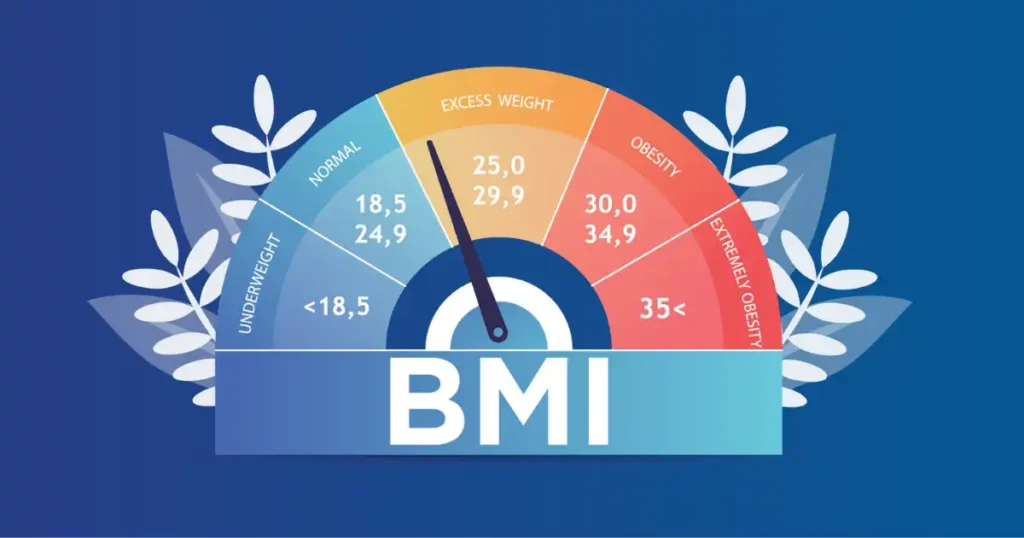
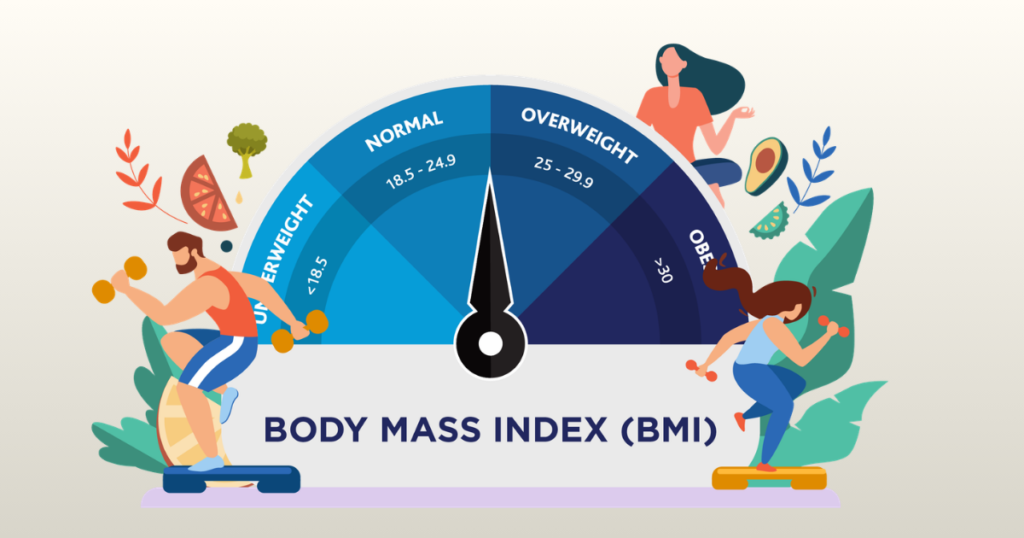
BMI stands for Body Mass Index. The formula is weight in kilograms divided by the square of height in meters.
BMI = Weight (kg) ÷ Height² (m²)
That formula was developed in the 1830s by a Belgian mathematician named Adolphe Quetelet. He was studying population statistics, not individual health. The formula has not fundamentally changed since then.
That’s worth sitting with for a moment. The core math behind nearly every BMI calculator you’ve ever used is nearly 200 years old. It was designed for studying groups of people, not diagnosing individual health conditions. Free tools use this formula. Professional tools use this formula too. The difference is what happens around the formula.
What BMI Can’t Tell You
This is where things get important. BMI cannot distinguish between muscle and fat. A pound of muscle and a pound of fat weigh exactly the same. So a very muscular person and a person carrying excess fat can have identical BMI scores, even though their health profiles are completely different.
BMI also cannot account for age. A 30-year-old and a 65-year-old with the same BMI have very different body compositions in most cases. Muscle mass declines naturally with age, so the same BMI number represents different body fat levels at different life stages.
Gender differences matter too. Women naturally carry more essential body fat than men because of hormonal and reproductive physiology. Standard BMI applies the same scale to both, which means the categories are not equally meaningful across sexes.
Cultural and regional body differences also affect how BMI should be interpreted. Research has consistently shown that people of South Asian and East Asian descent carry higher body fat percentages at the same BMI compared to people of European descent. This means standard BMI cutoffs may underestimate health risk for certain populations.
Free tools almost never explain any of this. Professional tools are more likely to address it.
To understand how these limitations play out in real tracking scenarios, our article on BMI calculator limitations explained covers the topic in depth.
Free BMI Tools: Quick, Easy, and Everywhere
Free tools are like street food. Fast, convenient, satisfying in the moment. Not always tailored to you specifically, but reliable enough for a quick bite.
Where Most People Use Free BMI Calculators
Free BMI calculators are embedded across thousands of websites. Fitness blogs host them as sidebar widgets. Health sites include them in article footers. Mobile apps offer them as a core feature. Even Google displays a quick BMI widget directly in search results when you search for “BMI calculator.”
This wide availability is one of the most useful things about free tools. You don’t have to go looking for them. They come to you.
Benefits of Free BMI Tools
The benefits of free BMI calculators are straightforward and real.
They give instant results. You enter two numbers and get your score in under three seconds. There is no account creation, no login, no subscription setup. You simply use the tool and move on.
They are mobile-friendly in most cases. Modern free tools are built to work on any screen size. You can check your BMI from your phone while standing in a gym locker room or sitting in a waiting room.
They are accessible to everyone. Cost is never a barrier. Anyone with internet access can use a free BMI calculator at any time.
For our comparison of what separates basic free tools from more capable versions, see our guide on free vs advanced BMI calculators.
Limitations You’ll Notice Eventually
Free tools work well until you need more than a number.
The most common limitation is lack of personalization. A free calculator doesn’t know your age, your fitness level, your medical history, or your ethnic background. It takes your weight and height, runs the formula, and hands you a category. That’s it.
The health advice on most free tools is generic. “You are in the overweight category. Consider improving your diet and exercise habits.” That advice applies to virtually everyone in that category regardless of their actual situation. It’s not wrong, but it’s not useful either.
Free tools rarely offer tracking. You get a result for today. You have no easy way to log it alongside past results, visualize your trend over time, or connect it to other health data like sleep or food intake. And You have to build your own tracking system, usually a simple spreadsheet.
Professional BMI Calculators: What Makes Them Professional?
This is where things start feeling more like a clinic than a calculator.
Advanced Metrics Beyond BMI
Professional BMI tools don’t stop at a single number. They use your basic inputs as a starting point and then expand outward into a fuller picture of your body composition and metabolic health.
Body fat percentage estimation is common in professional tools. They use additional inputs like age, sex, waist circumference, or neck measurement to estimate what percentage of your body mass is fat versus lean tissue. That distinction is far more clinically meaningful than raw BMI.
Visceral fat estimation is another feature found in higher-end tools, particularly smart scales paired with professional software. Visceral fat is the fat stored around your internal organs. It’s associated with elevated risk for cardiovascular disease, type 2 diabetes, and metabolic syndrome. Standard BMI tells you nothing about visceral fat. Professional tools with bioelectrical impedance can estimate it.
Metabolic rate insights, including basal metabolic rate and total daily energy expenditure, help translate body composition data into practical nutrition guidance. Knowing how many calories your body burns at rest makes it much easier to build an effective eating strategy.
Integration With Health Systems
Professional BMI tools are increasingly designed to connect with the broader health ecosystem.
Wearable integration allows tools to sync data from fitness trackers, smartwatches, and connected scales. Your BMI and body composition data can automatically update alongside your step count, sleep hours, and heart rate data. This connected view of health is something no free standalone calculator can offer.
Medical-grade reporting is a feature of clinical BMI systems used in healthcare settings. These tools generate formatted reports that healthcare providers can review, reference, and include in patient records. If you’re working with a doctor, dietitian, or physical therapist, this kind of structured output is genuinely useful.
Some professional tools offer outputs that have been reviewed or validated against clinical standards. That validation matters when a healthcare decision depends on the data.
Our article on best professional BMI calculator tools reviews the leading options in this category with practical detail.
Real Example Scenario
Picture a fitness coach in Seattle working with a 45-year-old client who has been training for six months with no visible progress on the scale. The coach runs the client’s data through a professional BMI tool that includes body fat percentage and visceral fat estimates.
The scale weight hasn’t changed much. But the body fat percentage has dropped from 29% to 23%. Visceral fat score has improved. Lean muscle mass has increased. The BMI number tells almost none of this story. The professional tool tells all of it.
That nuance is exactly why professional tools exist. They turn a single data point into a full narrative.
Key Differences Between Professional BMI Calculator vs Free Tools
A side-by-side view makes this clearer than paragraphs alone.
| Feature | Free BMI Tools | Professional BMI Calculators |
|---|---|---|
| Accuracy level | Basic estimate using standard formula | High, with multi-metric analysis |
| Personalization | None | Advanced, adjusts for age, sex, and more |
| Data tracking | Rarely included | Usually included with trend views |
| Body fat estimation | Not available | Often included |
| Medical use | Not recommended for clinical decisions | Often acceptable for clinical reference |
| Integration | Standalone only | Syncs with wearables and health apps |
| Cost | Free | Paid or subscription-based |
| Reporting | No structured output | Detailed reports available |
From hands-on testing, the gap becomes obvious after just a week of consistent use. Free tools feel fast but flat. Professional tools feel like they’re actually working with your health data rather than just processing it.
Accuracy Debate: Are Free BMI Tools Misleading?
Short answer: sometimes, yes. But not always in the way people assume.
Situations Where Free Tools Work Fine
For general population screening and casual fitness tracking, free tools are accurate enough. If you want to know whether you fall broadly within a normal weight range, any reputable free calculator using the standard WHO formula will give you a reliable answer.
Public health researchers use BMI data collected by free tools and basic clinical screenings. At the population level, the standard formula works well because individual variations tend to average out across large groups.
If you’re a generally healthy adult with an average body composition, a free tool’s output is a reasonable starting point for a health conversation.
When Accuracy Becomes Critical
Clinical decisions are where free tool limitations become genuinely problematic. If a healthcare provider is using BMI data to make treatment recommendations, refer you to a specialist, or set a weight management goal, the quality and context of that data matters.
Athletic training is another high-stakes area. Competitive athletes and serious gym-goers frequently get misclassified by standard BMI. A free tool that flags an athlete as “overweight” based on high muscle mass provides no useful guidance and can actually create unnecessary anxiety.
Weight loss plateaus often require a more detailed analysis. If someone has been dieting and exercising for months and the scale hasn’t moved, a free BMI calculator offers nothing. A professional tool that tracks body fat percentage and lean mass changes can show that real progress is happening even when the overall weight number is stuck.
Expert Insight
Dr. Emily Carter, a nutrition specialist based in California, has written clearly on this point in her clinical practice guidance: BMI alone is like judging a book by its cover. Professional tools read the full story. That metaphor captures exactly what the data shows. BMI gives you a cover. Body composition analysis gives you the content.
Real-World Use Cases: Who Should Use What?
Not everyone needs the same tool. Here’s how I’d match different types of people to the right option.
Best Users for Free BMI Tools
Students checking their health casually for a class assignment or general curiosity get everything they need from a free calculator. The result is accurate enough for that purpose and the simplicity is a genuine advantage.
Beginners starting a fitness journey benefit from free tools because they are non-intimidating. You don’t need to understand body fat percentages or visceral fat scores to begin making healthier choices. A simple BMI number is enough to establish a starting point.
People who are casually curious after reading a health article or watching a documentary don’t need to invest in a professional system. A quick free check satisfies that curiosity without creating friction.
Best Users for Professional BMI Tools
Fitness coaches and personal trainers need accurate body composition data to build effective programs for their clients. A professional tool that tracks fat loss alongside muscle gain is essential for making good coaching decisions.
Healthcare providers working on weight management, metabolic health, or cardiovascular risk assessment need data they can trust and reference clinically. Free tools don’t meet that standard.
Serious athletes who track performance metrics need tools that account for their unusually high muscle mass and low body fat. Standard BMI tells them almost nothing useful. Body composition-focused professional tools give them actionable data.
People managing chronic health conditions like type 2 diabetes, metabolic syndrome, or cardiovascular disease benefit from the detailed tracking and medical-grade reporting that professional tools provide.
For a comparison built specifically around fitness tracking use cases, our guide on BMI calculator for muscle gain tracking and lean mass goals is a useful companion resource.
Cost vs Value: Is Paying for BMI Tools Worth It?
Sometimes the right question isn’t whether something is expensive. It’s whether it’s useful enough for your specific situation.
| User Type | Free Tool Value | Professional Tool Value |
|---|---|---|
| Casual user | High | Low |
| Fitness enthusiast | Medium | High |
| Healthcare provider | Low | Very High |
| Serious athlete | Low | Very High |
| Beginner | High | Medium |
This table tells an important story. For casual users, paying for a professional tool delivers almost no additional value. They simply don’t need the extra features. For healthcare providers and serious athletes, the free tool delivers almost no useful additional value beyond the initial number.
The mistake I see often is people paying for professional tools before they actually need the depth those tools provide. If you’re just starting your health journey, a free calculator is the right tool. If you’re six months into a training program and want to understand what’s actually changing in your body, a professional tool starts earning its cost.
A surprising insight from my own experience: I overpaid for a premium BMI app in my first year of serious fitness tracking. I used about 20% of its features. The free CDC calculator would have served me just as well at that stage. I didn’t actually need the professional features until I was consistently training and wanted detailed body composition trends.
If you’re trying to decide between free and paid options right now, our comparison of free vs paid BMI calculators breaks down the real decision factors clearly.
Hidden Features in Professional BMI Tools You Might Not Expect
Professional tools often include capabilities that aren’t obvious from the marketing. These are the features I’ve found most valuable in real use.
Behavioral Insights
Some professional platforms analyze patterns in your data over time and surface insights about behavior. They can flag correlations between your activity levels and weight trends, or between sleep quality and metabolic rate changes. This kind of insight helps you understand why your numbers are changing, not just that they are changing.
Eating pattern analysis, when paired with food logging, shows how your dietary choices connect to body composition changes over weeks and months. This is genuinely powerful for anyone trying to make lasting changes.
Long-Term Progress Reports
Weekly and monthly trend reports give you a visual story of your health journey. Seeing a graph of your body fat percentage declining over six months is far more motivating than checking a number today and forgetting about it by next week.
Predictive health outcome features in some advanced platforms use your trend data to project where your metrics might land if you maintain your current habits. This isn’t medical diagnosis. It’s a motivational modeling tool that helps you visualize progress.
Integration With AI Coaching
Some professional platforms now incorporate AI coaching features that generate personalized fitness and nutrition suggestions based on your body composition data. If your body fat percentage has plateaued, the system might suggest increasing protein intake or adjusting your training split.
Adaptive calorie targets adjust based on your actual data rather than fixed formulas. If your metabolic rate shifts over time, a good professional tool notices and updates your recommendations accordingly.
Common Mistakes People Make When Using BMI Tools
I’ve made most of these myself. Learning from them saved me a lot of confusion.
Overtrusting a Single Number
One BMI reading tells you where you stood on one day. Your weight fluctuates by several pounds throughout the day due to hydration, food intake, and sodium. A single number can feel definitive, but it rarely is. Trends over weeks and months matter far more than any single data point.
Ignoring Body Composition
This is the most consequential mistake. Muscle-heavy individuals, older adults with low muscle mass, and people with specific body types are consistently misclassified by standard BMI. If you don’t understand how BMI handles body composition, you can draw completely wrong conclusions from your result.
Understanding the relationship between BMI and actual body composition is explored in our guide on understanding body composition: body fat, muscle, and BMI.
Not Updating Data Regularly
Old data creates misleading results. If you entered your weight six months ago and haven’t updated it, your current BMI display is wrong. This sounds obvious, but I’ve caught myself referencing stale numbers more than once.
For consistent tracking to be meaningful, you need consistent data entry. Pick a time each week or month, weigh yourself under the same conditions, and update your tool.
Using Different Tools Interchangeably
Switching between free tools and professional tools and comparing the results is a common source of confusion. Different tools may handle rounding differently, use different adjustment models, or display BMI prime versus standard BMI. Pick one tool for your primary tracking and stick with it long enough to see trends.
How to Choose the Right BMI Tool for Your Needs
This doesn’t need to be complicated. Here’s how I think through it.
Ask Yourself These Questions
Do you need medical-grade accuracy? If your data will be discussed with a healthcare provider or used in a clinical context, invest in a professional tool or use a clinically validated free tool like the CDC calculator.
Are you tracking long-term progress? If you want trend data over weeks and months, you need a tool that stores your results. Most free calculators don’t. A professional tool or health app with tracking features is the better choice.
Is this curiosity or a real health goal? Casual curiosity is fully satisfied by any reputable free calculator. A real health goal with specific targets and accountability benefits from a tool that matches the seriousness of the goal.
A Practical Decision Flow
For a casual check with no specific goal, a free tool from the CDC or NHS is the right choice. Fast, accurate, no friction.
For a fitness plan where you’re tracking changes over 8 to 12 weeks, a mid-level tool with body fat estimation and tracking features is worth the small investment.
Also, For managing a health condition, working with a trainer professionally, or needing clinically referenced data, a professional system is the appropriate level.
For women tracking health metrics across different life stages, our guide on BMI for women: beyond the numbers adds important context to this decision.
Personal Experience: Free vs Pro Tools Over 30 Days
This is the section I’m most personally invested in, because it’s based on something I actually did.
Week 1: Convenience Wins
I started with a free tool. The experience was genuinely good. Fast, clean, no barriers. I checked my BMI every morning and logged the result in a notes app. The friction was zero. I liked that a lot.
The number felt useful at first. I was in the normal weight range. I felt reassured.
Week 3: Frustration Creeps In
By the third week, the free tool had stopped giving me new information. I was getting the same number with minor daily fluctuations, and I had no idea what was causing those fluctuations. Was I gaining muscle? Losing fat? Retaining water? The free tool couldn’t tell me any of that.
The generic advice on the results page was starting to feel repetitive. I knew I should exercise and eat well. I was already doing both. And I needed to know if it was working. The free tool had no answer for that.
Week 4: Switching to a Pro Tool
Switching to a professional tool changed the quality of information I was getting immediately. I could suddenly see body fat percentage trending down while my scale weight stayed roughly the same. That pattern was invisible with the free tool. It was obvious with the professional one.
Sleep data correlation was the feature that surprised me most. The platform showed a clear link between nights where I slept under six hours and days where my weight was slightly higher due to cortisol-related water retention. I would never have noticed that pattern on my own.
By the end of the month, I had a real picture of what was happening in my body. Not just a number, but a story.
The Future of BMI Tools: Smarter or Just More Complicated?
The field is moving fast. Here’s where I see it going.
AI and Predictive Health
Artificial intelligence is beginning to change what health tracking tools can do. Early disease detection tools are being developed that use patterns in body composition data, combined with sleep, activity, and dietary inputs, to flag metabolic risk before it becomes a clinical problem.
Personalized health forecasting models are emerging that predict where your health metrics are likely to land based on your current trajectory. This isn’t science fiction. It’s in production in some platforms already.
The most promising development is tools that learn from your individual data over time rather than applying population-level averages to your personal health picture. That shift from population models to individual models is the most meaningful change happening in health technology right now.
Will BMI Become Obsolete?
Some experts think BMI will eventually be replaced entirely by more sophisticated body composition metrics. DEXA scans, continuous glucose monitors, and comprehensive blood biomarker panels offer far more nuanced health data than a simple weight-to-height ratio.
Others argue that BMI will evolve rather than disappear. Its simplicity is a genuine strength for large-scale population screening. It’s fast, free, and universally understood. Even if more accurate tools become widely available, BMI will likely remain the first filter for population health assessment for the foreseeable future.
My view is that BMI becomes more useful, not less, when it’s paired with better tools. The number itself is not the problem. The problem is using it in isolation and expecting it to tell a complete story.
Our article on when to upgrade from a BMI calculator addresses exactly this question: when does the standard tool stop being enough?
Final Recommendation
Here is my honest recommendation after 30 days of testing and years of working with health data.
The decision between a professional BMI calculator and a free tool is not really about which is better in the abstract. It’s about which is right for your specific situation at this specific time in your health journey.
If you are just starting out, building basic health awareness, or satisfying casual curiosity, a free tool is the right answer. Use the CDC calculator or the NHS tool. Both are accurate, credible, and completely free. Don’t overspend on features you won’t use.
If you are six months or more into a serious fitness or health program, you are likely hitting the ceiling of what free tools can tell you. A professional tool that adds body fat tracking, trend visualization, and behavioral insights will give you genuinely new information. That new information is worth paying for.
If you are working in healthcare, coaching athletes, or managing a chronic health condition, professional tools are not optional. The clinical accuracy, reporting features, and integration capabilities they offer are necessary for doing that work well.
My personal setup right now uses both. I use the CDC calculator once a month for a clean, clinically consistent BMI reference. I use a professional smart scale paired with a tracking app daily for body composition trends and long-term progress data. Together they give me more than either could alone.
The best tool is always the one that gives you information you can actually act on. Start simple. Upgrade when the simple version stops being enough. And never let any single number, free or paid, tell your whole health story.
FAQs About Professional BMI Calculator vs Free Tools
Are Professional BMI Tools More Accurate Than Free Ones?
For raw BMI calculation using the standard WHO formula, most reputable tools are equally accurate. The difference is in what professional tools add around that formula: age adjustments, body fat estimation, visceral fat scoring, and trend tracking. Those additions are where professional tools deliver value that free tools simply can’t match.
What Is the Best Free BMI Calculator?
For clinical credibility, the CDC BMI calculator is the top free choice. For user experience and health guidance, the NHS BMI tool is excellent. Both use the standard formula correctly and are widely recognized in health settings.
When Should I Switch From a Free to a Professional BMI Tool?
Switch when your free tool stops giving you new information. If you’re tracking a fitness transformation, managing a health condition, or working with a coach or healthcare provider who needs structured data, a professional tool is worth the investment.
Do Professional BMI Tools Store Personal Health Data?
Most do, and that’s part of their value. They store historical data to show you trends over time. Always check the privacy policy of any platform you use to understand how your data is handled and whether it is shared with third parties.

Shakitul Alam is the CEO, Owner, and Co-founder of BMI Calculator Women AI. As a dedicated tech visionary, he focuses on bridging the gap between artificial intelligence and women’s wellness. Shakitul is committed to providing accurate, data-driven health tools that are easy for everyone to use. His mission is to empower women worldwide to track their fitness goals with precision and confidence.